
The Rubber Floor Door Stop Wedge, 2-Pack is the top pick for most buyers. It ranks among the best door stoppers because its rubber wedge design holds a door open without screws, tools, or permanent changes. The two-piece format also gives you a spare or lets you secure two doors at once. Its low profile suits everyday indoor use, though very heavy doors or uneven flooring may need a different style.
This guide is for renters, homeowners, and anyone tired of doors drifting shut. For a door wedge or stop, focus first on length and height, since those dimensions determine clearance and fit. Material also matters. Rubber should grip smooth floors, while metal or rigid plastic may better suit heavier doors. The five picks below are ranked with clear reasons and honest drawbacks for each, so you can match the design to your doorway, floor surface, and daily needs.
Quick Comparison
| # | Product | Best For | Price | |
|---|---|---|---|---|
| 1 | Rubber Floor Door Stop Wedge, 2-Pack | Renters Protecting Painted Doors | ~$6 | View → |
| 2 | ProStoppr Door Stoppers | Frequent Heavy-Door Traffic | ~$8 | View → |
| 3 | Crosize Magnetic Door Stoppers, 2-Pack | Magnetic Hardware Fans | ~$8 | View → |
| 4 | AIMAXINKE Door Stopper | Baseboard Protection Seekers | ~$10 | View → |
| 5 | JZWBLILY Rubber Door Stopper Wedges, 2 Pack | Multi-Room Rubber Wedge Buyers | ~$5 | View → |
5 Top Door Stopper Picks
These five door stoppers are ranked by fit, holding strength, installation, and value, counting down to the top pick.
5. JZWBLILY Rubber Door Stopper Wedges, 2 Pack

Best for: Renters needing simple door control
The JZWBLILY set includes two black door wedges made from flexible natural rubber. Each measures 4.85 inches long, 2.2 inches wide, and 1.2 inches high. That size fits doors with up to 1.2 inches of floor clearance. The wedges work on tile, concrete, wood, and carpet, so they suit bedrooms, offices, garages, and other indoor spaces.
A sloped shape holds a door in place without drilling or permanent hardware. The reinforced outer edge and hollow center are designed to handle repeated daily use. For wider gaps, you can place two wedges back to back, although the fit depends on the door and floor. The rubber construction should help reduce scuffs compared with a hard plastic stop. At around $5 for two pieces, this is a low-cost option for stopping drafts, preventing slamming, or keeping a door open for pets and children. Still, these are simple floor wedges, not fixed wall or hinge stops.
Pros
- Two large wedges cover separate doors or provide a stacked setup.
- Natural rubber works across wood, tile, concrete, and carpet.
- No tools or mounting hardware are needed for quick placement and removal.
Cons
- The 1.2-inch height limits compatibility with doors that have larger gaps.
- A wedge can shift on very smooth floors or under a forceful, heavy door.
4. AIMAXINKE Door Stopper

Best for: Heavy doors with wide floor clearance
The AIMAXINKE Door Stopper is a large, bottom-of-door wedge made from stainless steel. It stands about 3 inches, or 76 mm, tall, giving it more reach than shorter floor wedges. The design fits beneath swinging doors, including heavier metal, wooden, glass, double, and self-closing doors. At around $10, it offers a low-cost way to hold a door open without drilling into the wall or floor.
A built-in spring presses the stopper against the door and floor, while rubber pads on both ends help limit sliding. The manufacturer lists compatibility with tile, carpet, wood flooring, and other common surfaces. Its size may help with doors that defeat small rubber wedges, especially in commercial or shared spaces. The package information also includes a three-year warranty, with the seller stating that support will address problems within 10 hours. That service claim comes from the manufacturer, so response times may vary.
Pros
- Stainless steel construction suits heavy commercial and residential doors.
- Three-inch height works with doors that have more clearance underneath.
- Spring tension and rubber contact points help keep the wedge in place.
Cons
- It needs a relatively large gap beneath the door, so it may not fit low-clearance doors.
- The tall, floor-mounted design can be noticeable and awkward in busy walkways.
3. Crosize Magnetic Door Stoppers, 2-Pack

Best for: Renters protecting walls and doors
The Crosize Magnetic Door Stoppers come as a two-pack for holding interior doors open. Each doorstop uses a stainless steel magnetic catch that connects the door to its wall-mounted base. The strong magnet is designed to resist ordinary drafts and help keep heavier doors from swinging shut. It also stops doorknobs from hitting painted walls, which can prevent scratches and dents over time.
Installation offers two options. Adhesive tape avoids drilling and works on smooth surfaces such as finished wood, glass, metal, and marble. For uneven walls or a more secure fit, the included screws provide a sturdier mounting method. The black finish suits many interiors, while the stainless steel construction has an anti-oxidation surface intended to resist rust. At around $8, the two-pack costs little compared with repairing wall damage. A two-year after-sale warranty adds some purchase protection, though the adhesive setup has clear limits.
Pros
- Two stoppers can protect multiple doors or provide a spare.
- Strong magnetic catches help doors stay open during normal airflow.
- Adhesive and screw mounting support renter-friendly or permanent installation.
Cons
- Adhesive tape is not suitable for textured, uneven, dusty, or weak surfaces.
- Screw installation requires drilling and may leave holes in the wall.
2. ProStoppr Door Stoppers
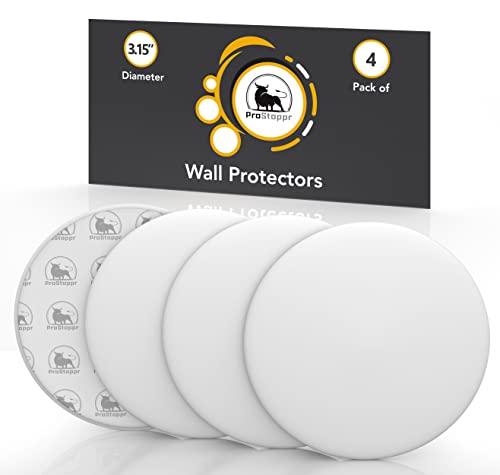
Best for: Covering wall dents behind door knobs
ProStoppr door stoppers come as a four-pack of large, 3.15-inch silicone rubber pads. Each pad mounts behind a door knob to cover existing marks and reduce impact noise when the door opens. The adhesive backing removes the need for screws, drilling, or extra hardware. At around $8, the pack offers a low-cost fix for several doors.
The large round shape is the main advantage. It covers more wall area than a small bumper and may also work behind chairs or furniture. The backing is listed for wood, drywall, cement, ceramic, marble, and glass, but surface preparation still matters. Installation involves wiping the area with a dry cloth, peeling the liner, and pressing the pad firmly into place. Silicone should soften the bang, not silence every door. The product listing does not provide a removal method or a guaranteed adhesive lifespan.
Pros
- Four 3.15-inch pads can protect multiple doors or cover larger wall dents.
- Silicone rubber helps reduce noise from door knob impacts.
- Peel-and-stick installation requires no drilling or assembly.
Cons
- The large diameter may look noticeable on narrow trim or small wall sections.
- Strong adhesive may be difficult to remove cleanly from painted or delicate surfaces.
1. Rubber Floor Door Stop Wedge, 2-Pack

Best for: Everyday doors on carpet or tile
This two-pack uses a heavy-duty, odorless rubber-like material to hold doors open or help keep them from moving. The gray wedges have a honeycomb surface that adds traction against carpet and tile. Each piece slides beneath the bottom of a door, so the setup needs no screws, drilling, or wall hardware. At around $6, the pair offers a low-cost option for bedrooms, classrooms, offices, and other busy spaces.
The main appeal is simple, flexible placement. You can keep one wedge near an entry door and another in a bedroom or workspace. The non-toxic material is designed for homes with children and pets, while the rubber construction should handle regular daily use better than a thin plastic wedge. The product is also made in the USA, which may matter to buyers who prefer domestic manufacturing. Still, the listing does not provide wedge dimensions or a recommended door gap, so fit can vary. Very heavy doors or doors with unusually high clearance may need a larger stopper.
Pros
- Two wedges cover separate rooms or provide a spare.
- Honeycomb rubber grip suits carpet and tile surfaces.
- Odorless, non-toxic material works well around children and pets.
Cons
- The listing does not state the wedge’s exact dimensions or maximum door gap.
- A floor wedge may not hold every heavy or high-clearance door securely.
Buying Guide
The most important factor is door and floor compatibility. A stopper that fits the gap and grips the surface will hold the door without sliding, scratching, or causing damage.
- Door gap: Measure the space beneath the door. Wedge models often need a gap of 0.5 to 1.5 inches, while larger gaps may require an adjustable or magnetic design.
- Floor surface: Choose rubber or silicone for tile, wood, laminate, and vinyl. Avoid hard metal edges on delicate flooring, and choose a textured base for smooth stone.
- Holding force: A 1- to 2-inch wedge usually suits lightweight interior doors. Heavy solid-wood or fire-rated doors need a larger wedge or a wall-mounted magnetic catch.
- Mounting method: Portable wedges need no drilling. Permanent floor or wall stops typically use one or two screws, so confirm the anchors match drywall, wood, or masonry.
- Pack size and price: Single wedges often cost $5 to $15. Six- to 12-piece packs suit offices or rental properties, while magnetic stops may cost $10 to $30 per pair.
If you cannot get everything, prioritize a secure fit for both the door gap and floor surface.
Frequently Asked Questions
How do I choose a door stopper for my home?
Choose a door stopper based on your floor surface, door weight, and available clearance. Rubber wedges suit smooth floors, while screw-in stops work well for heavier doors or regular use. Check the gap beneath the door before buying; many low-profile models need about 1/2 inch of clearance.
What type of door wedge works best on carpet?
A tall rubber or silicone wedge with a textured base usually works best on carpet. Its deeper profile can grip fibers without sliding when the door moves. Look for a wedge about 1 to 2 inches high, then confirm it fits beneath your door.
Can a door holder protect walls from handle damage?
Yes, a door holder can protect walls from handle damage when it stops the door before the knob reaches the wall. Wall-mounted models need solid installation and correct placement. Position the bumper where the door opens, often 2 to 4 inches from the baseboard, depending on the trim.
Are magnetic door stops better than rubber wedges?
Magnetic door stops are better for a clean, fixed installation, while rubber wedges offer easier repositioning and lower cost. A magnetic model usually needs screws and a matching catch on the door. Choose the wedge for temporary control, or the magnetic stop for one repeated open position.
Conclusion
Rubber Floor Door Stop Wedge, 2-Pack, is the top pick for shoppers who want a simple, reusable option for standard interior doors. If your priority is a tidy, low-profile setup, choose an adhesive or wall-mounted stopper instead, since it keeps the floor clear and avoids a loose wedge. Before buying, double-check the stopper’s size, the gap beneath your door, and compatibility with your flooring and door material. Confirm the package quantity, too, since a two-pack may not cover every doorway you need. Finally, check the current price before checkout, because discounts and bundle costs can change. The right door holder should match your space, door clearance, and daily routine.