
The AceMining Door Security Bar is the best security door stopper for most buyers because its adjustable design fits more door setups than a fixed wedge. This floor-braced bar adds a physical barrier without requiring tools, permanent installation, or changes to the door frame. It suits apartments, bedrooms, offices, and entry doors where a portable layer of resistance matters. Still, fit and floor contact affect how well any bar works, so placement matters.
This guide is for renters, homeowners, travelers, and anyone seeking a simple backup for a closed door. The key factors are adjustment range, sturdy materials, rubber grip, and compatibility with the door and floor. A bar that fits poorly can slide, while a solid stopper with weak contact may offer limited resistance. The 5 picks below are ranked with reasons and honest drawbacks for each, so you can choose based on your door, floor surface, and budget.
Quick Comparison
| # | Product | Best For | Price | |
|---|---|---|---|---|
| 1 | AceMining Door Security Bar | Renters Seeking Extra Door Protection | ~$22 | View → |
| 2 | Rerishom Door Security Bar | Sliding Door Security Shoppers | ~$37 | View → |
| 3 | SecurityMan 2-in-1 Door Security Bar | Multi-Use Entryway Security Buyers | ~$35 | View → |
| 4 | Door Stop Alarm Doorstop, 2-Pack | Apartment Dwellers Wanting Door Alarms | ~$13 | View → |
| 5 | Securadoor Adjustable Door Security Bar | Adjustable Fit Security Seekers | ~$109 | View → |
5 Top Door Security Stopper Picks
We ranked these door security stoppers by stability, ease of use, and versatility, counting down to the top pick.
5. Securadoor Adjustable Door Security Bar
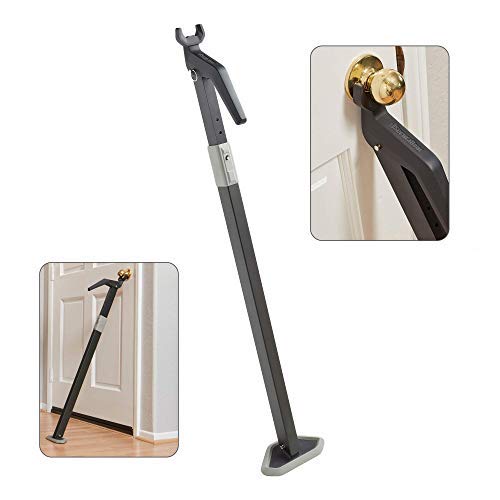
Best for: Inward-opening doors needing extra resistance
The Securadoor Super Heavy Duty Door Security Bar braces a hinged door between its interior doorknob and the floor. It weighs just over 3 pounds and uses an aluminum-alloy body with thermoplastic elastomer contact points. The bar adjusts from 34 to 48 inches, covering many standard residential, hotel, dorm, and office doors. It costs around $109, so it is a sizable purchase compared with basic travel door wedges.
Its main advantage is the adjustment system. A removable pin sets the rough height, while the rotating handle adds compression for a tighter fit. The handle yoke sits around the doorknob, and the rotating footplate is designed to stay aligned on carpet, vinyl, tile, concrete, or hardwood. The manufacturer cites more than 1 ton of tested strength, with testing by a UL-registered firm and an ISTA-certified laboratory. That rating does not make the bar a substitute for a locked entry door, but it gives this jammer a stronger design than lightweight wedge-style options.
Pros
- Fits doorknob heights from 34 to 48 inches.
- Works across several floor surfaces, including carpet and tile.
- Aluminum-alloy construction weighs just over 3 pounds for travel.
Cons
- Only fits hinged doors that open inward.
- Requires a compatible doorknob and floor contact point, so sliding doors and some unusual entry designs will not work.
4. Door Stop Alarm Doorstop, 2-Pack
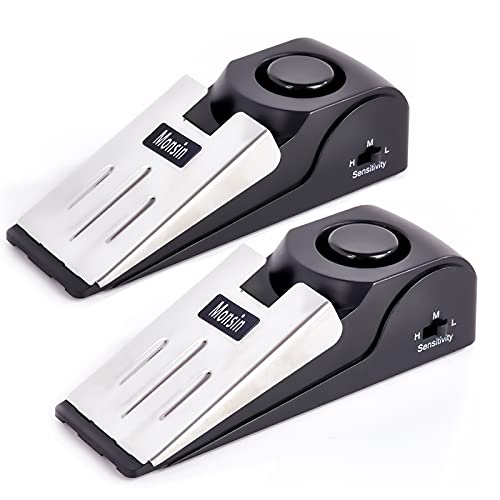
Best for: Hotel guests seeking portable door security
This two-pack combines a floor wedge with a built-in alarm. Place one unit behind a closed door, then switch it on. Pressure from the door activates the siren if the door moves forward. The rubber contact area adds friction, so it can also help hold the door in place without installation. At 4.5 ounces per unit, each stopper is light enough for a suitcase or overnight bag.
The alarm is rated at 120 dB, which should attract attention if someone pushes against the door. Three sensitivity settings let you adjust how far the door must move before activation. That range can help with different door gaps and floor surfaces, though the right setting may take some trial and adjustment. Each unit uses one 9V battery and is advertised to run for about one year under normal conditions. The battery is not included. At around $13 for two, this is a low-cost option for apartments, hotel rooms, and other temporary spaces.
Pros
- Two units cover separate doors or provide a spare.
- A 120 dB siren can alert nearby people quickly.
- No screws, wiring, or permanent installation are required.
Cons
- The 9V batteries must be purchased separately.
- Effectiveness depends on the door gap, floor grip, and sensitivity setting.
3. SecurityMan 2-in-1 Door Security Bar

Best for: Renters needing movable door security
The SecurityMan 2-in-1 security bar supports hinged doors and sliding patio doors or windows. Swap the included caps to change its purpose. For a standard door, the iron bar adjusts from 18.25 to 47.50 inches. With the sliding-door caps attached, its maximum length drops to 46.50 inches. That range fits many doors, but buyers should measure first.
The angled rubber foot braces against the floor without scratching it, while the upper cap fits common doorknobs and French-door handles. The manufacturer rates the high-grade iron bar for up to 400 pounds of pressure, though that figure is not an independent test result. Setup involves placing the bar under a knob, then adjusting its length. The package includes a three-part bar, two door caps, two sliding-door or window caps, a guide, and a 12-month warranty. At around $35, it offers one device for two entry points.
Pros
- One adjustable bar works with hinged doors and sliding doors.
- The 18.25-to-47.50-inch range covers many standard openings.
- Rubber contact helps protect floors from scratches during use.
Cons
- Sliding-door caps reduce the maximum length to 46.50 inches.
- It requires a suitable knob, handle, or floor contact point, so it may not fit every door layout.
2. Rerishom Door Security Bar

Best for: renters securing patio doors
The Rerishom set includes two adjustable security bars for hinged or sliding doors. Each bar measures 1.57 inches in diameter and adjusts from 17.5 to 46 inches. For sliding doors, the listed maximum is 43 inches. That range covers many standard door openings, while the two-pack can protect separate doors without buying another bar.
The main appeal is simple, tool-free setup. You place the bar between the floor and door area, then adjust its length for a snug fit. Rerishom rates the bar to resist up to 400 pounds of pressure, although that figure comes from the manufacturer rather than independent testing. The white finish suits many interiors, but it may show dirt more quickly than darker colors. At around $37 for two, the set costs about $18 per bar. A 20-month warranty also provides some coverage after purchase.
Pros
- Two bars protect two doors or provide a spare.
- Adjustable length fits openings from 17.5 to 46 inches.
- No drilling or permanent installation, making it useful for renters and travel.
Cons
- It is a physical brace, not a keyed lock, alarm, or smart security device.
- The bar needs a suitable floor and door contact point, so it may not work well with every door design or uneven surface.
1. AceMining Door Security Bar

Best for: Travelers securing inward-opening doors
The AceMining Door Security Bar is an adjustable brace for standard doors and sliding patio doors. Its listed length adjusts from 21 to 46 inches, while the full bar weighs about 2.2 pounds. That makes it practical for home storage or travel. A single lever controls setup, and the three-stage design allows quick deployment without permanent installation. At around $22, it costs less than many installed door locks.
The standout details are its 1.57-inch pipe diameter, alloy connection points, and fiberglass-reinforced plastic parts. AceMining claims the brace can withstand up to 400 pounds of force, but that figure should not be treated as a guarantee against forced entry. Correct placement matters. The rubber foot must sit firmly against the floor with no gap, or the bar may slip. It also cannot secure every door style, and it works best when the door opens inward. The company includes 20 months of customer service, which adds some support after purchase.
Pros
- Adjusts from 21 to 46 inches for many doors and patio doors.
- Weighs about 2.2 pounds, making it easier to carry while traveling.
- Uses alloy joints and fiberglass-reinforced plastic components.
Cons
- Requires careful positioning, with the rubber foot pressed firmly against the floor.
- Does not guarantee entry prevention and may not fit every door or opening direction.
Buying Guide
Fit and resistance to forced movement matter most when choosing a security door wedge. The stopper must match the door gap, floor surface, and opening direction, or it may slide or fail under pressure.
- Door gap: Choose a model rated for your measured clearance, often 0.25 to 1.5 inches. Measure from the floor to the bottom of the closed door.
- Floor grip: Rubber or silicone bases suit tile, wood, and laminate. Look for a contact pad at least 2 inches wide, since metal-only feet can slide on smooth floors.
- Construction: Choose hardened steel or thick aluminum for the body, paired with a rubber contact surface. Avoid thin plastic for exterior doors or heavy entry doors.
- Door type: A wedge fits hinged doors, while portable alarms or under-door bars suit inward-opening doors. Confirm that a bar fits doors at least 1.5 inches thick.
- Portability and price: For travel, select a unit under 1 pound and about 6 inches long. Basic wedges cost $10 to $20, while alarmed or bar-style models often cost $20 to $50.
If you cannot have everything, prioritize a precise fit and a wide, non-slip base.
Frequently Asked Questions
How does a security door stopper prevent forced entry?
A security door stopper prevents forced entry by bracing the door against the floor and resisting inward pressure. Most models use a rubber foot, metal body, or adjustable rod to create friction. A floor-braced unit may work best on smooth surfaces, while a wedge can suit gaps around 0.5 to 1 inch.
What should you look for in a door security stopper?
Look for a strong metal frame, a non-slip base, adjustable height, and compatibility with your door and floor. A stopper with a steel shaft and rubber foot usually offers better support than a lightweight plastic wedge. Check the listed door gap, since many adjustable models cover roughly 0.5 to 2 inches.
Can a door jammer work on carpet and tile?
A door jammer can work on carpet and tile, but its grip depends on the base design and floor condition. Wide rubber feet usually hold better on hard tile, while pointed or textured bases may stay steadier on carpet. Avoid loose rugs, which can let a brace slide under pressure.
Are portable door stoppers effective for apartments?
Portable door stoppers can improve apartment security when the door opens inward and the floor provides firm contact. They add resistance but cannot replace a locked deadbolt or reinforced strike plate. A compact wedge weighing about 4 to 8 ounces may fit travel bags, though it offers less support than a metal jammer.
Conclusion
The AceMining Door Security Bar is the top pick for renters and homeowners who want a visible, adjustable barrier without drilling into the door or frame. If your priority is a loud alert rather than physical resistance, pick an alarm-equipped door device instead, since it can draw attention when someone tries to enter. Before buying, double-check the bar’s size range, compatibility with your door and floor, the number included in the package, and the current price. No stopper replaces a locked door, solid hardware, or sensible entry habits. Use these products as an extra layer, especially for apartments, hotel rooms, and ground-floor entrances. A snug fit matters more than flashy features, because poor contact can reduce resistance.