
Treslam Outdoor Composite Decking Boards is the top pick for most buyers and a strong choice for the best composite decking material because it focuses on low upkeep and a familiar wood-board appearance. Its composite construction suits homeowners who want a deck surface without the regular sealing schedule that natural timber can require.
This guide is for anyone comparing boards for a patio, balcony, porch, or full backyard deck. Pay close attention to board size, composite makeup, surface texture, color options, and fastening requirements. Those details affect installation time, appearance, and long-term maintenance. The five picks below are ranked with clear reasons for their positions, along with honest drawbacks for each product.
Quick Comparison
| # | Product | Best For | Price | |
|---|---|---|---|---|
| 1 | Treslam Outdoor Composite Decking Boards | Homeowners Building Outdoor Decks | ~$280 | View → |
| 2 | ShunHong Solid Composite Decking Boards | High-Traffic Patio Renovators | ~$350 | View → |
| 3 | IDZO Wood Plastic Composite Deck Tiles | Renters Wanting Modular Flooring | ~$70 | View → |
| 4 | NewTechWood UltraShield Naturale Composite Deck Tiles | Style-Focused Balcony Upgraders | ~$69 | View → |
| 5 | Diablo Carbide Teeth Jigsaw Blade | DIYers Cutting Dense Materials | ~$14 | View → |
5 Composite Decking Materials Worth Considering
These options are ranked by durability, appearance, upkeep, and value, counting down from the fifth choice to the top pick.
5. Diablo Carbide Teeth Jigsaw Blade
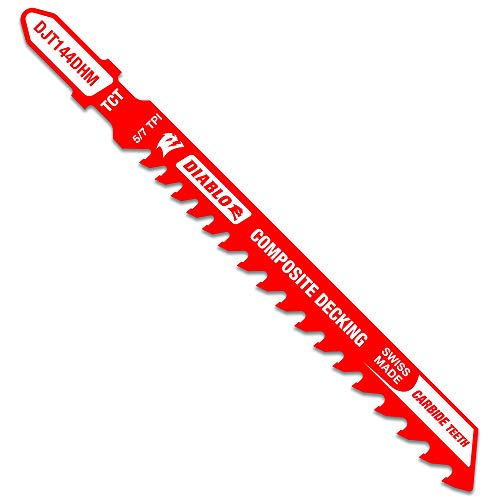
Best for: Cutting composite decking without melting
This 4-inch Diablo jigsaw blade uses carbide teeth with a 5/7 TPI pattern. Its T-shank fits most modern jigsaws, including many cordless models. The blade is made for composite decking, plywood, pressure-treated wood, PVC, and other dense materials that can wear down ordinary steel blades.
The main draw is its carbide construction. Diablo claims up to 50 times the cutting life of a standard blade, though actual life depends on the material and cutting technique. A TiCo Hi-Density carbide tooth design handles abrasive boards, while the Perma-SHIELD coating helps reduce friction and heat. That matters when cutting plastic or composite decking, where excessive heat can cause melting. The aggressive teeth favor quick cuts over ultra-smooth finishing. At around $14, this blade costs more than a basic multipack, but the longer service life may make sense for repeated renovation work.
Pros
- Carbide teeth handle composite decking, PVC, plywood, and treated lumber.
- Perma-SHIELD coating helps limit heat, friction, and melted plastic.
- T-shank design fits most current jigsaws and many combo-style tools.
Cons
- The aggressive 5/7 TPI tooth pattern may leave rougher edges than a fine-finish blade.
- T-shank compatibility is broad, but it will not fit every older or unusual jigsaw.
4. NewTechWood UltraShield Naturale Composite Deck Tiles

Best for: Tool-free patio and balcony updates
NewTechWood UltraShield Naturale tiles are 1 ft. x 1 ft. square panels made from high-density polyethylene plastic, wood fibers, and a polymer coating. Each tile has a four-way interlocking base, so the pieces snap together without tools. At around $69, the price makes more sense for a focused area than a full-size deck.
The raised underside gives water a path beneath the surface, which suits balconies, pool surrounds, patios, and outdoor kitchens. These tiles can also be removed or rearranged for temporary events. The material is designed to resist fading, cracking, bending, and everyday wear, but the surface still needs basic care. Rinse it with water or use a household cleaner a few times a year. The square joints create a firm walking surface when the tiles fit correctly. One major catch is compatibility: these tiles only work with NewTechWood deck tiles, so they are not a flexible add-on for another brand’s system.
Pros
- Tool-free installation uses four-way connectors, allowing custom layouts without cutting or fasteners.
- Raised bases drain water below the tiles, helping reduce puddles in wet outdoor areas.
- Composite construction resists fading, cracking, bending, and wear better than untreated wood.
Cons
- The tiles only connect with NewTechWood Deck Tiles, which limits replacement and expansion choices.
- One-foot squares create visible joints and may require careful measuring around posts, corners, and drains.
3. IDZO Wood Plastic Composite Deck Tiles

Best for: Small patios and apartment balconies
The IDZO set includes 10 gray interlocking deck tiles made from FSC-certified wood plastic composite, or WPC. This material combines wood fibers with plastic for better resistance to moisture, splitting, rust, and corrosion than untreated wood. The tiles suit patios, balconies, rooftops, and outdoor decks. At around $70, they make sense for covering a modest area rather than a full-size deck.
Installation needs no screws or special hardware. Each tile snaps into the next, so a homeowner can assemble the surface with basic planning. A jigsaw can cut tiles around corners, posts, or other obstacles. The four-sided drainage grid beneath each piece helps rainwater escape instead of sitting under the decking. Cleaning should also stay simple because the tiles do not need paint or laminate coatings. The gray finish offers a cleaner, more uniform look than mismatched outdoor pavers, though buyers should confirm the tile dimensions and total coverage before ordering.
Pros
- FSC-certified WPC uses responsibly sourced wood fibers and plastic.
- Interlocking bases install without screws, nails, or special tools.
- Drainage grids reduce trapped water and simplify routine cleaning.
Cons
- A 10-piece set may cover only a small section, depending on each tile’s dimensions.
- A jigsaw is still needed for precise cuts around corners and fixed obstacles.
2. ShunHong Solid Composite Decking Boards

Best for: Covered patios needing low upkeep
The ShunHong Outdoor Solid decking set includes six 8-foot composite boards in Redwood and Maple color options. The boards use a WPC blend of recycled wood fibers and high-density polyethylene, with a capped outer layer designed to resist moisture, stains, fading, rot, and decay. At around $350 per six-board pack, this is a sizable material purchase, not a small repair kit.
Its main appeal is reduced upkeep compared with untreated lumber. Cleaning should require soap and water instead of annual sanding, staining, or sealing. The textured wood-grain surface may also provide more grip than smooth boards, which can help around children and pets, though no outdoor decking is completely slip-proof. ShunHong also says the boards include flame-retardant protection. Buyers should confirm the product’s fire rating and local code requirements before placing them near grills or fire pits. The color options offer a consistent wood look without natural knots or splits.
Pros
- Six 8-foot boards provide substantial length for a deck project.
- Composite construction resists rot, decay, splitting, and routine moisture damage.
- Capped surfaces need soap-and-water cleaning instead of regular staining or sealing.
Cons
- Around $350, the six-board pack costs more upfront than many basic wood boards.
- The listing does not provide board width, coverage, fasteners, or a complete installation system, so buyers must verify material needs before ordering.
1. Treslam Outdoor Composite Decking Boards

Best for: DIY patio and balcony flooring
Treslam’s package includes nine black composite decking boards, each 96 inches long, 5.4 inches wide, and 0.9 inch thick. The rigid, hard-core construction gives the surface a solid profile, while the molded grain aims to look like natural wood without the upkeep of timber. This setup suits small decks, balconies, walkways, or repair sections where long boards can reduce the number of seams.
The included installation kit is a useful part of the package. It contains stainless steel spiked clips, screws, and black edge clips, giving buyers the main fastening pieces for installation. The boards are designed to resist water, stains, fading, scratches, insects, and rodents, but long-term results still depend on framing, spacing, drainage, and local weather. At around $280, this is a sizable material purchase, especially if the project needs extra boards, tools, or a substructure. The low-maintenance appeal is strongest for shoppers replacing wood that needs regular sanding, staining, and sealing.
Pros
- Nine 8-foot boards provide long runs with fewer joints.
- Stainless steel clips, screws, and edge clips come included.
- Composite construction reduces routine sanding, staining, and sealing.
Cons
- Nine boards may not cover a larger deck or patio.
- Buyers may still need cutting tools, framing, and drainage preparation.
Buying Guide
Choose a capped board first, because its polymer shell protects the wood-plastic core from moisture, stains, and fading. That outer layer usually matters more than color or texture when a deck faces rain, snow, and daily foot traffic.
- Board construction: Choose capped composite for exposed decks. The plastic shell covers all four sides on some boards, while three-sided caps leave the underside more vulnerable to moisture.
- Board size and profile: Compare 12-, 16-, and 20-foot lengths to reduce seams. Solid boards feel sturdier, while scalloped boards weigh less. Confirm the required joist spacing, often 16 inches on center.
- Warranty coverage: Look for a 25- to 50-year limited warranty. Check separate fade, stain, and structural terms, since color coverage may last only 5 to 10 years.
- Heat and slip performance: Lighter colors generally absorb less heat than dark brown or black boards. For rainy areas, seek published wet-slip data instead of relying on a textured surface alone.
- Total project cost: Material prices commonly fall near $4 to $12 per square foot, before labor, framing, stairs, and fasteners. Hidden clips can add $0.50 to $2 per square foot.
If you must compromise, prioritize a capped surface and a warranty that covers fading and structural failure.
Frequently Asked Questions
How do I choose the right composite decking material?
Choose a composite decking board by comparing its core, cap, texture, warranty, and heat performance for your climate. Capped boards have a protective polymer layer, while uncapped boards usually cost less but absorb more moisture. Compare warranties of 25 to 50 years, and check coverage for fading, stains, and structural defects.
What is the best type of composite decking for most homes?
For most homes, capped composite decking is the strongest all-around choice because its outer shell resists moisture, stains, and fading better than an uncapped board. It typically costs more upfront. Many capped products carry 25-year warranties, while basic uncapped options may have shorter coverage and more visible color change.
Can composite decking work in rainy or sunny climates?
Yes, composite decking can work in rainy or humid climates when the boards have a capped surface and the framing allows drainage. Leave the manufacturer’s required gaps, keep leaves from blocking spaces, and use corrosion-resistant fasteners. Areas with strong sun should favor lighter colors, which generally feel cooler underfoot.
Are composite boards more expensive than pressure-treated wood?
Yes, composite boards usually cost more initially than pressure-treated wood, but they often need less staining, sealing, and board replacement. Material prices commonly range from about $5 to $15 per square foot, before installation. Your total also depends on substructure repairs, stairs, railings, fasteners, and local labor rates.
Conclusion
Treslam Outdoor Composite Decking Boards suit homeowners who want a practical surface for patios, balconies, or garden walkways without choosing premium-priced boards. If your priority is the lowest upfront cost, choose a hollow-core composite option instead, since it typically uses less material and costs less per board. Before buying, double-check each board’s length, width, thickness, and surface finish, then confirm compatibility with your joists, clips, screws, and planned layout. Calculate the needed quantity with a waste allowance for cuts, and compare the current price per board and per square foot. Also review delivery charges and return terms, since long decking packages can be costly to send back. This final check helps prevent mismatched parts, shortages, and surprise costs.