
For most buyers, DAP DryDex Dry Time Indicator Spackling is the top pick, and it earns our best drywall mud spot because its color change shows when a patch is ready to sand. The pink-to-white indicator gives you a clear visual cue, which helps reduce guesswork on small repairs, nail holes, and shallow dents.
This guide is for homeowners, renters, and DIY users fixing damaged walls before painting. The key factors are coverage, drying time, container size, and how easily each compound sands smooth. A lightweight filler may work well for small holes, while deeper damage needs stronger adhesion and multiple coats. The five picks below are ranked with clear reasons and honest drawbacks for each, so you can match the wall repair product to your project.
Quick Comparison
| # | Product | Best For | Price | |
|---|---|---|---|---|
| 1 | DAP DryDex Dry Time Indicator Spackling | First-Time Wall Patchers | ~$9 | View → |
| 2 | Red Devil 0544 ONETIME Lightweight Spackle | Quick Small-Hole Repairs | ~$7 | View → |
| 3 | DAP DryDex Lightweight Low-Dust Joint Compound | Low-Dust Sanding Projects | ~$26 | View → |
| 4 | DAP 7079810100 Wallboard Joint Compound | Larger Drywall Seam Repairs | ~$15 | View → |
| 5 | MuddSkip Smooth Drywall Additive Powder | Smoother Mud Application | ~$33 | View → |
5 Top Drywall Compound Picks
These five drywall compounds are ranked by finish quality, workability, and value, counting down to the top pick.
5. MuddSkip Smooth Drywall Additive Powder
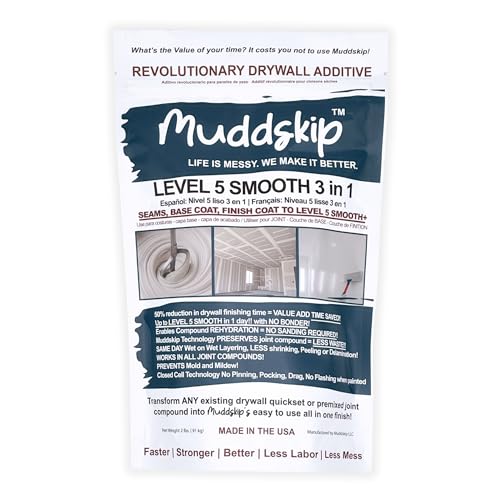
Best for: Smooth drywall seams and finish coats
This 2-pound bag contains a powder additive for drywall joint-compound work. It suits seams, base coats, and finish coats where a very smooth surface matters. The formula targets a Level 5+ finish, so it fits projects that need more than a basic taped-and-coated wall. It also supports same-day wet-on-wet coats for deep fills and larger repair areas.
The main draw is reduced sanding. The compound can be rehydrated and reworked for up to 24 hours, giving you extra time to correct marks or refine the surface. It is designed to bond to painted walls and plaster without a separate bonder, which removes one prep step. The additive also aims to reduce shrinkage, dips, and repeat repairs as the compound dries. At around $33, this Made-in-USA formula costs more than basic joint compound. Results still depend on proper mixing and application. It is not the heavy-duty formula for major repairs or textured surfaces.
Pros
- Supports Level 5+ smooth finishes on seams and coated surfaces.
- Allows same-day wet-on-wet coats for faster repair work.
- Can bond to paint and plaster without a separate bonder.
Cons
- The 2-pound bag may not cover extensive remodeling projects.
- It is not intended for heavy repairs or textured surfaces.
4. DAP 7079810100 Wallboard Joint Compound
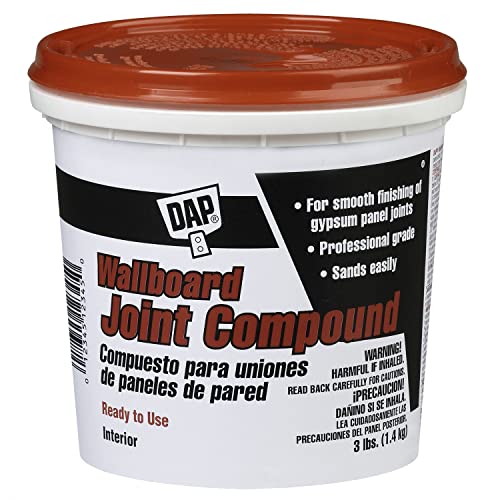
Best for: Small drywall repair projects
DAP Wallboard Joint Compound is a white, ready-mixed compound for interior drywall and gypsum panel work. The 3-pound container suits small repairs, joint finishing, and touch-ups without requiring powder and water mixing. Use it to embed reinforcing tape, cover seams, fill nail heads, or finish metal corner beads. It can also patch damaged interior walls and create simple wall texture.
The main advantage is convenience. The premixed formula is ready to spread, and it applies smoothly with a taping knife before sanding. Once dry, it can leave an even surface for primer and paint. DAP lists minimal shrinkage and crack resistance, which can help repairs stay neat over time. At around $15, this tub works well for modest household jobs, but its smaller volume limits coverage. It is made for interior use, not exterior repairs, and larger projects may require several containers.
Pros
- Ready-mixed formula skips powder-and-water preparation.
- Works for seams, nail heads, tape, corner beads, patches, and texture.
- Sands easily and resists cracking with minimal shrinkage.
Cons
- The 3-pound size can run out quickly on multi-room repairs.
- It is limited to interior surfaces and requires proper surface preparation.
3. DAP DryDex Lightweight Low-Dust Joint Compound

Best for: DIY drywall repairs and finishing
DAP DryDex Lightweight Low Dust Joint Compound comes in a 1-gallon tub for interior drywall work. It is made for smoothing gypsum panel joints, covering nail heads, and finishing metal corner beads. The compound applies pink, then dries white. That color change gives you a visual cue for the next coat, sanding, or painting. It does not require guessing based only on touch or lighting.
The lightweight formula shrinks less than many standard joint compounds, so repairs may need fewer coats. Its de-aired mixture also reduces pin-hole bubbles, which can leave a smoother surface with less patching. DAP says it produces 70% less airborne dust than other low-dust joint compounds, though sanding still creates some cleanup. At around $26, the 1-gallon container makes sense for several small repairs or one moderate drywall project. This is an interior-use product, not a solution for outdoor patching or wet locations.
Pros
- Pink-to-white color change helps show when the surface is ready for another coat, sanding, or paint.
- Lightweight material shrinks less and may reduce the number of coats required.
- De-aired formula helps limit pin-hole bubbles, while the low-dust formulation can reduce cleanup.
Cons
- It is intended for interior use, so it cannot replace an exterior-rated patching compound.
- The color indicator depends on the compound drying fully, which can take longer in cool or humid rooms.
2. Red Devil 0544 ONETIME Lightweight Spackle

Best for: Quick drywall repairs around the home
Red Devil ONETIME Lightweight Spackle comes in a 1-quart tub of white repair compound. It is made for filling holes, cracks, and dents in drywall, plaster, wood, and stucco. The formula works indoors or outdoors, giving homeowners one product for several common repair jobs. At around $7, the tub offers a practical option for patching more than a few small nail holes.
Its main advantage is the reduced cleanup. The no-sand formula is designed to dry smooth, so many repairs can move straight to painting. The product is also described as paintable within minutes, which can shorten the time between patching and finishing. Red Devil says the compound resists shrinking, cracking, and flaking after it dries. That makes it useful for routine wall maintenance, though the surface still needs to be clean and properly prepared. The lightweight texture should also make the compound easier to spread than heavier fillers.
Pros
- 1-quart size suits multiple repairs, not just one small patch.
- Works on drywall, plaster, wood, and stucco surfaces.
- No-sand formula can reduce dust and cleanup before painting.
Cons
- A full quart may be excessive for buyers fixing only one or two tiny holes.
- Lightweight spackle is intended for surface repairs, not structural damage or major wall rebuilding.
1. DAP DryDex Dry Time Indicator Spackling

Best for: Routine drywall and trim repairs
DAP DryDex is a 32-ounce tub of latex polymer spackling for patching interior or exterior surfaces. It works on drywall, plaster, wood, brick, and stone. The formula starts pink, then turns white as it dries, giving you a visible cue before the next repair step. For a patch about 1/8 inch deep, it can dry in roughly one hour. Full color change may take one to five hours, depending on the repair and conditions.
That color indicator is the main reason to choose this wall filler. You do not have to guess if a pink area still needs more time. Repairs deeper than 1/8 inch need two or more layers, with drying time between coats, so larger holes take longer. DAP says the dried material resists cracking, crumbling, flaking, and shrinking. Indoor repairs also do not need primer before painting, which removes one step. At around $9, the tub offers a practical amount for several small patches.
Pros
- Pink-to-white color change helps show when the spackle has dried.
- Works on drywall, plaster, wood, brick, and stone.
- Indoor repairs do not require primer before painting.
Cons
- Repairs deeper than 1/8 inch require multiple coats and extra drying time.
- Drying can take up to five hours, so it may slow down larger repair jobs.
Buying Guide
Match the compound type to your repair and finish level first. Premixed all-purpose paste suits general seams, while setting-type powder works better for deep fills and faster repairs.
- Compound type: Choose all-purpose for tape and multiple coats, topping compound for the final coat, or setting powder for holes deeper than 1/8 inch.
- Working time: Pick a 20-, 45-, or 90-minute setting formula based on your pace. Premixed compound usually needs about 24 hours between coats, depending on humidity.
- Shrinkage and cracking: For gaps wider than 1/4 inch, use setting compound in layers instead of one thick application. This reduces sagging and shrinkage.
- Sanding needs: Look for lightweight or topping formulas when easy sanding matters. Use 120- to 150-grit sandpaper after the surface fully dries.
- Package size and price: Buy a 3.5-quart tub for small patches, a 4.5-gallon pail for several rooms, or a 5-pound bag of powder for occasional repairs. Check the lid seal before buying.
If you cannot have every feature, prioritize the compound type because the wrong formula creates more rework than slower drying or extra sanding.
Frequently Asked Questions
How do I choose the right drywall mud for my project?
Choose drywall mud by matching its type to the repair, working time, and finish you need. Use lightweight all-purpose compound for general seams, setting-type powder for stronger fills, and topping compound for a smoother final coat. A 45-minute setting compound gives more working time than a 20-minute formula.
What is the best drywall compound for beginners?
All-purpose premixed compound is usually the easiest drywall mud for beginners because it needs no mixing and works for taping, filling, and skim coats. For a few nail holes or one short seam, a 3.5-quart tub is easier to handle than a 4.5-gallon bucket.
Can I use joint compound to patch large holes?
You can use joint compound for large drywall holes, but holes over about 6 inches need backing or a drywall patch first. Apply it in thin layers, letting each coat dry before adding the next. For a 10-inch opening, screw a matching drywall piece to backing strips, tape the seams, then cover them with compound.
Are setting-type compounds better than premixed mud?
Setting-type compounds are better for deep fills and faster repairs, while premixed mud is better for easy spreading and longer working sessions. Powdered formulas harden in a stated time, such as 20, 45, or 90 minutes, but they require accurate mixing and quick cleanup. Choose premixed compound for broad finishing coats.
Conclusion
DAP DryDex Dry Time Indicator Spackling is the top pick for homeowners and DIY repairers who want a color change that shows when small holes, nail pops, and shallow dents are ready for sanding. If your priority is covering broad seams, deeper damage, or a larger project in fewer batches, choose a setting-type joint compound instead, since it suits extensive drywall work better than premixed spackle. Before buying, double-check the container size for your repair list, confirm that the product works on your wall surface and planned finish, compare the included quantity with competing tubs, and check the current price because promotions and package sizes can change the value.