
When you’re chasing crisp mountain air or setting up camp under a star‑filled sky, a reliable portable wood stove can mean the difference between a cozy, home‑cooked meal and a chilly night spent huddling around a flickering fire. Choosing the right model isn’t just about heat output; it’s about weight, fuel efficiency, safety features, and how easily it packs into your backpack or car trunk. In this guide we’ve tested dozens of units, compared performance data, and consulted outdoor experts to bring you the six best portable wood stoves on the market today. Read on to discover which stove earns top marks for durability, convenience, and value.
6 Top Portable Wood Stoves You’ll Love
After extensive testing, we’ve narrowed down the market to six reliable, lightweight models perfect for camping, emergencies, and off‑grid adventures.
6. Kuvik Titanium Wood Stove

The Kuvik Titanium Wood Stove redefines ultralight cooking for backpackers, campers, and survivalists. Measuring just 6.25” × 5” × 5” and collapsing to a sleek 0.2‑inch profile, it fits snugly into its dedicated carrying case—keeping soot away from the rest of your gear. Weighing only 6.8 oz, the stove is forged from Grade‑1 titanium, delivering steel‑like strength while staying half the weight. Setup is a breeze: pop the tabs into their slots, and the stove instantly becomes a freestanding fire pit with a convenient opening for stoking and a sturdy rack that accepts a range of pot and pan sizes. Forget bulky fuel canisters; the stove runs on whatever dry organic material you find—twigs, sticks, grass, roots, or bark—making it a reliable heat source wherever you roam.
Pros
- Ultralight & compact – ideal for ultralight packs and bug‑out bags.
- Durable titanium construction – corrosion‑resistant, steel‑strength performance at a fraction of the weight.
- Fuel‑free convenience – uses natural, readily available biomass, eliminating the need for canisters.
Cons
- Limited fuel size – works best with small twigs and dry material; larger logs may be impractical.
- Learning curve – efficient burning requires a bit of practice in gathering and arranging the right kind of fuel.
5. Unho Wood Burning Stove

The Hot Tent Stove is a rugged, stainless‑steel wood‑burning unit built for campers, ice‑fishers, hunters, and backyard enthusiasts who crave real fire heat without the hassle of a traditional campfire. Its 7‑inch stainless chimney pipe delivers clean, directed exhaust, while the stable, wide‑base legs keep the stove steady on uneven terrain. The compact frame folds easily for transport, yet the heavy‑duty construction ensures it can withstand repeated use in harsh winter conditions. With a simple airflow control system, you can start a fire quickly and maintain an efficient burn that radiates warmth across your tent, shelter, or patio, turning chilly evenings into cozy gatherings.
Pros
- Durable stainless steel construction guarantees long‑term reliability and resistance to rust.
- Seven‑inch chimney pipe provides excellent ventilation, improving safety and combustion efficiency.
- Stable legs & airflow control make it easy to set up and adjust heat output for any outdoor setting.
Cons
- Weight: The robust build makes the stove heavier than some ultra‑light alternatives, which may affect backpacking comfort.
- Size: While portable, the stove’s footprint is larger than ultra‑compact models, requiring a bit more storage space.
4. Lineslife Cast Iron Wood Stove

Lineslife’s Wood Burning Camp Stove is a compact, cast‑iron powerhouse built for the backcountry chef. Crafted from high‑quality cast iron, the stove resists rust and corrosion, promising years of rugged use. Sixteen strategically placed air vents deliver a steady flow of oxygen, producing an efficient, clean burn that can keep a full‑capacity combustion chamber going for 40‑60 minutes on a single load of twigs, pine cones, straw, or charcoal.
The design is fully adjustable: each pot holder slides to accommodate a range of cookware, while the fold‑out legs swivel and collapse for stable placement on uneven terrain. Setup is a breeze—unfold, place fuel, and you’re cooking in minutes. When it’s time to move on, the stove folds down to a compact 9.4 × 9.4 × 4 in (24 × 24 × 10 cm) package, weighs just 7 lb (3.2 kg), and slips into the included carrying bag for effortless backpack transport.
Pros
- Durable cast‑iron construction ensures long‑term, rust‑free performance.
- Efficient 16‑vent system provides a long burn time (40‑60 min) from a small fuel load.
- Adjustable pot holders & foldable legs make the stove versatile for different cookware and uneven ground.
Cons
- At 7 lb, it’s heavier than ultra‑light aluminum alternatives, which may be a consideration for ultra‑minimalist hikers.
- The large combustion chamber requires a reasonable amount of fuel, so it’s less ideal for ultra‑short trips where weight and fuel quantity are critical.
3. Ohuhu Camp Stove Stainless Steel Portable Stove
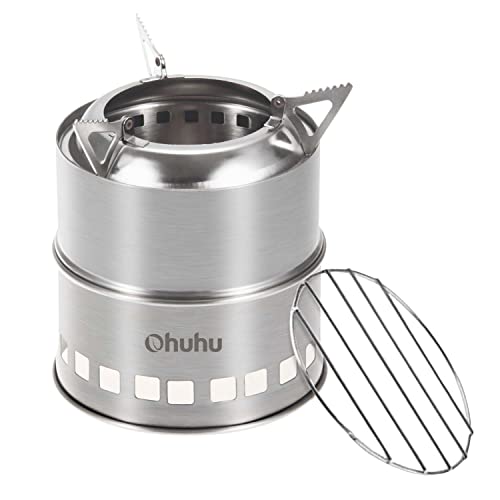
The Ohuhu Camp Stove is a mini, stainless‑steel wood‑burning stove built for every outdoor adventure. Weighing just 0.98 lb, it slides into a backpack, car trunk, or emergency kit and assembles in seconds—no tools required. Its compact frame holds a detachable stainless‑steel plate that supports pots, pans, and even a grill grid, making it ideal for boiling water, cooking meals, or heating up a campfire for comfort.
Thanks to the high‑grade stainless steel construction, the stove resists corrosion, handles high temperatures, and endures the bumps of backcountry travel. The adjustable ash catcher offers two height settings (2.8″ / 3.8″), letting you dial in intense grilling heat or gentle simmering. Fuel flexibility is a major win: you can burn wood, solid fuel tablets, or a small gas canister, giving you eco‑friendly options and peace of mind when supplies run low. A handy carry bag completes the package for hassle‑free transport.
Pros
- Ultra‑light & portable – under 1 lb, fits anywhere in your pack.
- Versatile fuel options – wood, tablets, or gas for cost‑effective cooking.
- Adjustable heat control – two height settings for precise temperature management.
Cons
- Limited flame size – best for single‑pot cooking; not suited for large‑scale grilling.
- Requires dry wood or fuel – performance drops in wet conditions unless you have a dry source.
2. Japard Wood Burning Camp Stove

The Japard Wood Burning Camp Stove is a rugged, portable cast‑iron‑style cooker built for serious backpackers and outdoor enthusiasts. Crafted from high‑quality stainless steel, the stove resists rust and corrosion, promising years of reliable service. Sixteen strategically placed air vents deliver optimal airflow for fast, clean combustion, while the foldable legs let the base collapse flat for compact packing. At 10.6 × 10.6 × 15 inches and 7.28 lb, it’s lightweight enough for a day‑hike yet sturdy enough for steady heat. Setup takes just minutes, and the included carrying case makes transport a breeze. Versatile fuel options—wood, straw, charcoal—mean you can cook a hearty stew, boil water, or fire up a quick BBQ wherever you roam.
Pros
- Durable, rust‑proof stainless steel ensures long‑term use in harsh conditions.
- 16 air vents provide efficient, low‑smoke burning and quick heat‑up.
- Foldable legs & compact case make it easy to pack and carry on any adventure.
Cons
- Weight (7.28 lb) may be on the heavier side for ultra‑light backpackers.
- Requires dry, suitable fuel; damp wood can reduce performance.
1. YRenZ Portable Wood Stove

The YRenZ Upgraded Portable Wood Stove is a compact powerhouse designed for tent camping and outdoor adventures. Built from heavy‑duty steel, its thick walls stand up to high temperatures without warping, delivering reliable performance night after night. The spacious firebox holds a generous amount of wood, extending burn time so you stay warm and can cook meals without constant refueling. Thanks to its high‑airtight construction, the stove door seals tightly and the chimney draft is optimized, preventing smoke from leaking into your shelter and ensuring a clean, efficient burn. The first use will produce a brief black plume of smoke—this is simply the high‑temp paint curing and disappears after a 20‑30 minute outdoor burn. Should you need assistance, a 24/7 customer service team is ready to help.
Pros
- Robust steel build resists warping and lasts through many camping trips.
- Large firebox provides longer burn periods and steady heat for cooking and warmth.
- High airtightness eliminates smoke leakage, keeping the tent interior fresh and comfortable.
Cons
- Initial curing smoke may concern first‑time users; a short outdoor burn is required before indoor use.
- Weightier than ultra‑light models due to the thick steel, which may affect backpackers seeking minimal load.
Buying Guide
Choosing the right portable wood stove hinges on heat output, weight, and ease of use, as these factors determine how effectively the stove will serve camping, emergency, or off‑grid needs. Look for models that balance efficient combustion with sturdy construction to ensure reliable performance wherever you go.
- Heat efficiency and output – Aim for a stove that delivers at least 5,000 BTU per hour while maintaining low fuel consumption, so you stay warm without exhausting wood supplies.
- Weight and size – A compact, lightweight design (under 10 lb) is essential for backpacking or limited storage, yet it should still provide a stable base and sufficient cooking surface.
- Material durability – Cast iron or high‑grade steel frames resist corrosion and cracking, extending the stove’s lifespan through repeated heating cycles.
- Ventilation and safety features – Look for adjustable air vents, a spark guard, and a secure lid to control flame intensity and prevent accidental burns.
- User reviews and warranty – Positive feedback on reliability and a solid manufacturer warranty (minimum 1 year) indicate trustworthy quality and after‑sales support.
By weighing these criteria, you can select a portable wood stove that delivers consistent warmth, durability, and value for any outdoor adventure.
Frequently Asked Questions
What features should I look for in the best portable wood stove?
- Size & Weight: A compact design (usually 10‑15 lbs) that fits in a backpack or small vehicle.
- Fuel Efficiency: Look for a stove with a high combustion rate and a secondary air intake to maximize heat output while minimizing wood consumption.
- Heat Output: Aim for at least 5,000 BTU/hr for cooking and warming small spaces.
- Durability: Cast iron or stainless‑steel bodies resist corrosion and warping.
- Ease of Use: Simple assembly, a built‑in ash pan, and a clear viewing window make operation straightforward.
Which portable wood stove is considered the top performer for camping?
The Solo Stove Lite consistently ranks at the top for campers:
- Weight: Only 1.5 lb, making it ultra‑light for backpacking.
- Design: Double‑wall construction creates a secondary combustion chamber for cleaner, hotter burns.
- Heat: Generates up to 2,000 BTU/hr—enough for cooking and keeping a small shelter warm.
- Fuel: Burns twigs, pine cones, and small branches, so you can use readily available natural fuel.
- Maintenance: Removable ash pan and simple cleaning process.
How do I safely operate a portable wood stove in a tent or small shelter?
- Ventilation: Always open a vent or window to allow fresh air in and exhaust gases out.
- Fire‑Resistant Base: Place the stove on a fire‑proof mat, stones, or a metal tray to protect the floor.
- Clear Space: Keep flammable materials (blankets, clothing, gear) at least 3 feet away.
- Monitor Burn: Never leave the stove unattended; keep a small fire extinguisher or a bucket of sand nearby.
- Cool‑Down Period: Allow the stove to cool completely before packing it away to avoid accidental burns.
Conclusion
Choosing the right portable wood stove hinges on balancing efficiency, durability, and ease of use, ensuring you stay warm without sacrificing convenience. Prioritize models that offer reliable heat output while remaining lightweight and compact for effortless transport and storage. Safety features—such as sturdy construction, secure lids, and proper ventilation—are essential to prevent accidents and maximize performance. Consider fuel flexibility, as stoves that burn a variety of wood types give you greater adaptability on the trail. Ultimately, a well‑designed portable stove enhances outdoor experiences, delivering consistent warmth, low emissions, and peace of mind wherever your adventures take you.