
Choosing the right axe can mean the difference between a smooth, efficient split and a frustrating, back‑breaking ordeal, especially when you’re prepping firewood for the cold months or tackling a weekend woodworking project. A well‑balanced head, the proper weight, and a durable handle not only speed up the job but also reduce strain and the risk of injury, letting you spend more time enjoying the warmth of a fire and less time battling stubborn logs. In this post we’ll walk through the top six axes that consistently earn high marks for performance, durability, and user comfort, so you can pick the perfect tool for your needs. Let’s dive in.
6 Best Axes for Splitting Wood – Expert Picks
Whether you’re a weekend warrior or a seasoned lumberjack, these six axes deliver the power and precision you need.
6. Fiskars X7 Small Hatchet Axe

The Fiskars X7 Small 14″ Hatchet Axe is built for anyone who needs fast, reliable kindling on a camping trip or during backyard fire‑pit evenings. Its insert‑molded forged steel head and low‑friction blade coating keep the edge sharp longer, while the lightweight 14‑inch design lets you make deeper cuts in small‑ to medium‑sized wood without tiring out your arm. The balanced weight distribution gives each swing a boost of power, making fire‑wood prep feel effortless. Paired with the award‑winning FiberComp shock‑absorbing handle and non‑slip grip, the hatchet reduces hand fatigue and prevents the blade from sticking, even in wet or greasy conditions. Plus, the included sheath protects the blade and your gear when you’re on the move. Fiskars backs this tool with a lifetime warranty, so you can trust its durability for years of outdoor adventures.
Pros
- Sharp, long‑lasting edge thanks to proprietary blade‑grinding and low‑friction coating.
- Comfortable, fatigue‑reducing handle with FiberComp shock absorption and non‑slip grip.
- Excellent power‑to‑weight ratio, delivering quick, deep cuts on kindling and small branches.
Cons
- Blade length (14 in) may be too short for larger firewood splitting tasks.
- The sheath, while useful, adds a small amount of extra bulk to pack weight.
5. Husqvarna S2800 Wood Splitter

The Husqvarna Wood Splitting Axe S2800 is built for the serious wood‑cutter who needs a tool that can handle large logs with confidence. Its premium 5 lb. steel axe head is heat‑treated and coated to stay sharp longer, while the fiber‑glass composite handle delivers a comfortable grip and superior vibration dampening. The axe’s perfect balance and weight distribution let you swing smoothly, reducing fatigue during long splitting sessions. Backed by a lifetime warranty and compliant with California’s Proposition 65 labeling, the S2800 combines durability with peace of mind.
Pros
- Powerful, coated steel head – cuts through thick firewood quickly and resists wear.
- Well‑balanced design – optimal weight distribution means less effort and more control.
- Durable composite handle – resistant to weather, cracks, and splintering, extending the axe’s life.
Cons
- Heavier at 5 lb. – may be challenging for users with limited upper‑body strength or those preferring a lighter tool.
- No replaceable head – the head is integral to the axe, so any damage may require a full replacement rather than a simple head swap.
4. GARDENWORK WSA-32 Wood Splitting Axe
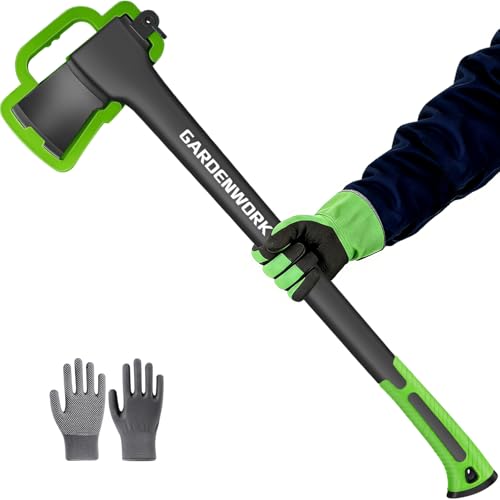
The GARDENWORK 32‑inch Wood Splitting Axe is built for anyone who needs to tame big logs with minimal effort. Its 65 % manganese steel blade is heat‑treated to HRC 60, giving it exceptional hardness and edge retention while resisting dents from heavy impacts. The enlarged, forged head expands the contact surface, letting you split thick timber quickly and cleanly.
A standout embedded blade design integrates the handle and head, eliminating the weak points that cause traditional axes to crack under prolonged use. The hollow‑nylon, shock‑absorbing handle dampens vibration far better than solid fiberglass, and the textured rubber grip—paired with the included non‑slip gloves—keeps your hands steady in wet or cold conditions.
Whether you’re gathering firewood, clearing a campsite, or tackling garden debris, this axe delivers the power and control needed for efficient, safe chopping.
Pros
- High‑efficiency cutting: enlarged head + manganese steel blade splits large logs with little force.
- Durable, impact‑resistant construction: HRC 60 heat‑treated blade stays sharp and undeformed.
- Comfortable, low‑vibration handling: hollow nylon handle + rubber grip + gloves reduce fatigue and boost safety.
Cons
- The 32‑inch length may be a bit long for tight spaces or users with shorter reach.
- Nylon handle, while shock‑absorbing, is not as rigid as a full‑metal shaft, which some traditionalists prefer for maximum leverage.
3. Fiskars X25 Splitting Axe

The Fiskars X25 Splitting Axe is built for anyone who needs to turn bulky logs into ready‑to‑burn firewood with minimal effort. Its 28‑inch forged‑steel blade features an advanced bevel‑convex geometry that delivers extra power while helping the blade release cleanly from the wood after each strike. Paired with a lightweight, shock‑absorbing FiberComp handle—stronger than steel yet softer on the hands—the axe offers a balanced, “aluminum‑bat” feel that boosts swing speed and reduces fatigue. Whether you’re clearing a yard, prepping firewood for a campsite, or tackling a bushcraft project, the X25’s multi‑use design handles medium to large logs with one‑strike efficiency. The axe ships with a durable protective sheath and is backed by Fiskars’ lifetime warranty, giving you confidence that this tool will stay sharp and reliable season after season.
Pros
- Maximum power & precision – convex blade geometry adds cutting force and easy release from wood.
- Comfortable, shock‑absorbing handle – FiberComp material dampens vibration, preventing over‑strike damage.
- Versatile multi‑use tool – ideal for firewood, yard work, and bushcraft tasks on medium‑to‑large logs.
Cons
- Longer shaft – the 28‑inch length may feel unwieldy for users with limited swing space.
- No built‑in hammer – lacks a secondary function that some splitting mauls provide.
2. Fiskars 8 lb. Splitting Maul

Fiskars’ 8 lb. Splitting Maul combines a massive 36‑inch IsoCore shock‑absorbing handle with a forged‑steel, rust‑resistant blade that stays sharper longer than a conventional axe. The inseparable, riveted head delivers one‑strike splits on medium‑to‑large hardwood logs, making it ideal for firewood, campfire prep, and even backyard yard work. The textured, non‑slip grip reduces hand strain while the advanced blade geometry helps the head release cleanly from the wood, so you spend less time wrestling the tool and more time getting the job done. Backed by a lifetime warranty and shipped with a protective sheath, this maul is built for durability and the occasional bushcraft adventure.
Pros
- IsoCore shock‑absorbing handle – cushions impact, minimizes fatigue, and improves control.
- Forged steel blade with advanced geometry – stays sharper longer, splits tough logs efficiently, and releases easily from the wood.
- Long 36‑inch handle – gives taller users optimal leverage and a comfortable, ergonomic grip.
Cons
- Weight and size – at 8 lb. and 36 inches, the maul may be overkill for very small branches or for users who prefer a lighter handheld axe.
- Limited portability – the large sheath and overall length make it less convenient for backpacking trips where space is at a premium.
1. Fiskars X27 Splitting Axe

The Fiskars X27 Super Splitting Axe is built for anyone who needs to turn bulky logs into ready‑to‑burn firewood with minimal effort. Its 36‑inch shock‑absorbing handle gives taller users the leverage they need, while the textured non‑slip grip keeps the axe steady even in wet conditions. The hardened forged‑steel blade features an advanced convex bevel that stays sharper longer than a standard axe and slides out of the wood more easily, reducing the dreaded “sticking” problem. Whether you’re clearing a yard, prepping firewood for a campsite, or tackling a bushcraft project, this multi‑use axe delivers one‑strike splits on medium to large logs. It ships with a protective sheath and is backed by Fiskars’ lifetime warranty, so you can count on durability season after season.
Pros
- Powerful one‑strike splitting – convex bevel and forged steel cut through medium‑large logs efficiently.
- Comfortable, low‑vibration handling – shock‑absorbing 36″ handle with non‑slip grip reduces hand fatigue.
- Long‑lasting performance – hardened blade stays sharp longer; lifetime warranty adds peace of mind.
Cons
- Length may be unwieldy for users with shorter reach or limited storage space.
- Weight is on the heavier side, which is great for power but can be tiring during prolonged use.
Buying Guide
When choosing an axe for splitting firewood, the most important things are the weight, blade geometry, and handle material, because they determine how efficiently the tool cuts through grain. These attributes directly affect the amount of effort needed and the longevity of the tool.
- Weight and head shape: a 3–4 lb head with a tapered wedge concentrates force and reduces bounce.
- Handle material and length: hickory or fiberglass handles of 28–36 in provide a balance of shock absorption and leverage.
- Edge durability and heat‑treatment: a forged steel head that is hardened and tempered holds a sharp edge longer.
- Grip ergonomics and safety features: non‑slip rubber inserts and a well‑balanced head lower fatigue and improve control.
- Price versus warranty and user reviews: a reasonable price coupled with a solid warranty and positive feedback often signals overall quality.
By weighing these factors—weight, handle, steel quality, ergonomics, and value—you can select an axe that splits wood cleanly and lasts season after season.
Frequently Asked Questions
What axe weight and length are ideal for splitting firewood?
A splitting axe should typically weigh 5–7 lb (2.3–3.2 kg) and have a handle length of 28–36 in (71–91 cm). This range provides enough momentum to drive the blade through wood while remaining manageable for most users. Heavier axes (7 lb+) are better for larger logs, whereas lighter models (5 lb) are easier on the arms for frequent use.
Should I choose a straight‑handle or a curved‑handle axe for splitting?
For splitting, a straight‑handle axe is generally preferred because it delivers a more direct, powerful swing and aligns the blade with the force of the blow. Curved handles are common on felling axes where a slicing motion is beneficial, but they can reduce efficiency when driving a wedge into wood.
Is a steel or a laminated (steel‑core) head better for splitting?
A laminated head (steel core with a softer outer layer) offers the best of both worlds: the hard core retains a sharp edge, while the softer exterior absorbs shock and reduces the chance of the head cracking. High‑carbon steel heads are durable and inexpensive, but they can become brittle over time. For heavy, regular splitting, a laminated axe is the most forgiving and long‑lasting choice.
Conclusion
Choosing the right splitting axe hinges on balancing power, control, and durability. A well‑weighted head delivers the momentum needed to split even dense grain, while a comfortable, vibration‑dampening handle reduces fatigue during long sessions. Look for a sharp, convex blade that channels force efficiently, and remember that regular maintenance—sharpening, oiling, and proper storage—keeps performance consistent. Safety gear and proper technique are just as vital as the tool itself. By matching the axe’s size and design to your typical log dimensions and personal strength, you’ll achieve faster, cleaner splits and a more enjoyable fire‑wood preparation experience.