
Imagine slicing fresh veggies on a board that not only protects your knives but also safeguards your health—no hidden chemicals leaching into your meals. In today’s kitchen, a cutting board is more than a convenience; it’s a frontline defense against toxins like BPA, formaldehyde, and harmful plastics that can migrate into food during prep. Choosing a nontoxic board means preserving flavor, extending the life of your knives, and keeping your family safe from long‑term exposure. In this post we’ve tested dozens of options and distilled the results into a concise guide, highlighting the top six best nontoxic cutting boards on the market. Let’s dive in and find the perfect, worry‑free surface for your culinary adventures.
6 Top Nontoxic Cutting Boards You’ll Love
We’ve tested dozens of options, and these six stand out for safety, durability, and kitchen-friendly performance.
6. Greener Chef Luxury Bamboo Cutting Board
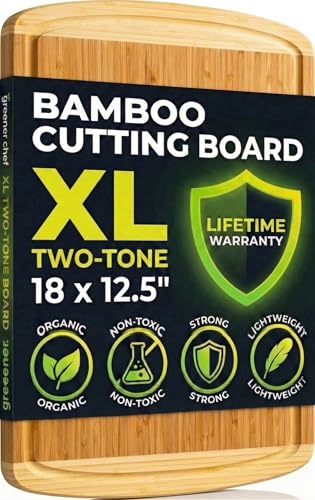
The Greener Chef Luxury Bamboo Cutting Board is an 18 × 12.5 in XL workhorse that makes prep a pleasure. Its dual‑sided design offers a deep juice groove on one side for roasts and a flat, drip‑free surface on the other—perfect for charcuterie or delicate slicing. Crafted from organic FSC‑certified Moso bamboo using rare Vertical Grain construction, the board stays strong and stable while remaining lightweight at just 3.5 lb and only 0.6 in thick, so you won’t strain your back moving it around the kitchen. The natural two‑tone finish adds a touch of elegance to any countertop, and caring for it is simple: wash, rinse, air‑dry, and oil occasionally. Backed by a Lifetime Replacement Guarantee, this board is as reliable as it is beautiful—making it an ideal gift for weddings, housewarmings, or holidays.
Pros
- Spacious & versatile: Large surface with reversible juice groove handles big cuts and elegant presentations.
- Durable & eco‑friendly: Vertical grain bamboo resists warping and is free of plastics, BPA, and toxins.
- Lightweight & easy to handle: Thin profile and low weight reduce fatigue compared with heavy butcher blocks.
Cons
- Not dishwasher safe: Requires hand washing and occasional oiling to maintain longevity.
- Limited color options: The natural bamboo finish may not match every kitchen décor style.
5. GORILLA GRIP BPA-Free Kitchen Cutting Board Set, Reversible

The GORILLA GRIP BPA‑Free Reversible Kitchen Cutting Board Set brings professional‑grade durability to any home kitchen. Each board is 3rd‑party tested for strength, featuring a non‑porous, thick plastic surface that won’t splinter, peel, or absorb odors like wood or bamboo. Deep juice‑catching grooves keep messes contained, while the slip‑resistant rubber border and ergonomic handle keep the board firmly in place during prep. The set is dishwasher safe, so cleanup is effortless, and the BPA‑free, food‑grade material meets U.S. safety regulations for everyday use. With three generous sizes—large (16×11.2 in), medium (13.8×9.6 in), and small (11.8×8 in)—you’ll have the perfect board for everything from carving roasts to slicing veggies, and even for stylish charcuterie presentations.
Pros
- Ultra‑durable construction – non‑porous, splinter‑free surface that resists wear and lasts longer than wood or bamboo.
- Secure, slip‑resistant grip – rubber border and handle prevent sliding, providing stable cutting and safer handling.
- Easy care – dishwasher safe and BPA‑free, eliminating the need for oiling or special maintenance.
Cons
- Plastic feel may not appeal to users who prefer the aesthetic of natural wood.
- Heavier than thin boards; the combined 4.25 lb set can be cumbersome to store in tight spaces.
4. Keechee Bamboo Cutting Board

Keechee’s Bamboo Cutting Board set delivers a smart, eco‑friendly solution for every kitchen task. The trio of sizes—15×10 in, 12×8 in, and 9×6 in—means you always have the perfect board for meat, veggies, fruit, cheese, or quick slices, eliminating the clutter of multiple single boards. Each board is crafted from cross‑laminated bamboo that’s been carbonized at 500 °F (260 °C). This high‑temperature treatment locks in a rich, dark hue, reduces water absorption to just 5 %, and dramatically improves resistance to warping, cracking, and odor retention. The surface stays knife‑friendly, protecting blades while the finely sanded finish feels smooth to the touch.
Built‑in handles make transferring ingredients a breeze, and the deep juice groove on one side catches runoff, keeping countertops clean. Both sides are usable, extending the board’s lifespan. Hanging holes let you dry the boards upright, saving counter space. Because bamboo is fast‑growing and harvested sustainably, you get a durable, environmentally responsible kitchen companion that’s easy to clean with a quick wipe and a light coat of mineral oil.
Pros
- Versatile three‑size set – one board for every prep need.
- Carbonized bamboo – low moisture uptake, warps‑proof, and knife‑friendly.
- Dual‑side use & juice groove – longer life and mess‑free chopping.
Cons
- Requires periodic oiling to maintain optimal moisture resistance.
- The deep groove may be unnecessary for users who prefer a completely flat surface for certain tasks.
3. Titanium Pro Cutting Boards
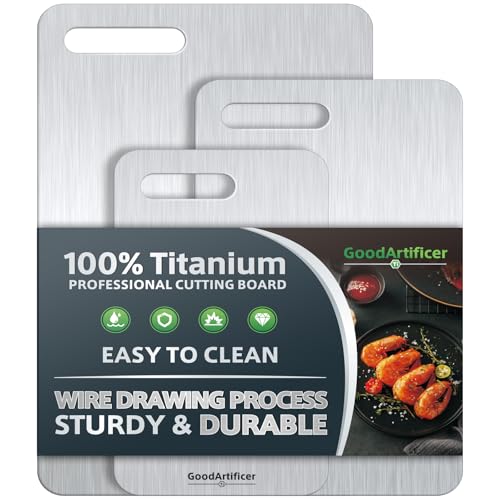
The Titanium Cutting Boards Set of 3 brings kitchen precision and durability together in a sleek, non‑toxic package. Each set includes three perfectly proportioned boards—16″ × 10″, 13″ × 8″, and 10.5″ × 6.5″—so you can match the board size to any ingredient, from a whole roast to a handful of herbs. The double‑sided design lets you keep raw proteins separate from cooked foods, preserving flavor and preventing cross‑contamination. Crafted from a single piece of molded titanium alloy, the boards contain no glues or adhesives; the brushed, non‑porous surface resists stains, odors, and warping even after repeated exposure to moisture. Cleaning is a breeze—just rinse or pop them into the dishwasher, where their thin profile saves space. Packaged in vibrant, gift‑ready boxes, they make a stylish, health‑focused present for anyone who loves to cook.
Pros
- Ultra‑durable, non‑toxic material – one‑piece titanium alloy eliminates warping, cracking, and chemical leaching.
- Double‑sided for safe food handling – separate raw and cooked foods without needing extra boards.
- Easy cleanup – smooth surface is dishwasher safe and quick to rinse, saving time after meals.
Cons
- Higher upfront cost compared with standard plastic or wooden boards.
- Heavier than plastic – may feel bulky for users who prefer ultra‑lightweight options.
2. SNOWCLAD Stainless Steel Cutting Board

The SNOWCLAD double‑sided cutting board is built for the modern kitchen. One side is solid stainless steel—ideal for meat, poultry, and fish—while the opposite side is a sturdy wheat‑straw PP surface perfect for veggies, fruits, and bread. Measuring 16 × 11 inches, the board offers plenty of space for prep work, and a built‑in stainless‑steel handle gives a secure grip and an easy hanging point for storage. The stainless‑steel side features a deep juice groove that captures liquids, keeping your countertop clean, and both surfaces are non‑porous, so they won’t absorb odors or bacterial residue. Cleanup is a breeze: simply wipe with soap and water or toss it in the dishwasher. Each board undergoes a multi‑step inspection, and SNOWCLAD backs it with a 100 % refund or replacement if it arrives damaged.
Pros
- Dual‑material design – steel for meat, wheat‑straw PP for produce, reducing cross‑contamination.
- Juice groove & non‑porous surfaces – easy mess control and superior hygiene.
- Sturdy handle & dishwasher safe – safe handling, convenient hanging, and effortless cleaning.
Cons
- The stainless‑steel side can be heavier than traditional plastic boards, which may feel bulky for some users.
- The wheat‑straw PP surface, while durable, may show scratches over time with heavy use.
1. Greener Chef Luxury XL Bamboo Cutting Board Set

The Greener Chef Luxury XL Bamboo Cutting Board Set of 3 brings kitchen‑grade performance and eco‑conscious design together in one sleek package. Crafted from 100 % FSC‑certified Moso bamboo, each board is non‑toxic, BPA‑free and completely non‑porous—perfect for raw poultry, fish, or any ingredient you prep. The rare vertical‑grain construction gives the boards exceptional strength, resisting cracks, warps, and splits even under heavy daily use. With three extra‑large sizes (18 × 12.5″, 14.5 × 11.5″, and 12 × 9″), you’ll have 50 % more surface area than typical wood boards, while the slim 0.6‑inch profile keeps them lightweight and easy to maneuver. Care is a breeze: simply wash with mild soap, air‑dry, and oil occasionally. Their natural two‑tone finish makes them look as good serving charcuterie as they do chopping vegetables, and the lifetime replacement guarantee removes any risk for the buyer.
Pros
- Eco‑friendly & safe: Pure organic bamboo with no microplastics, toxins, or BPA.
- Durable vertical‑grain construction: Stands up to heavy chopping, cutting, and carving without cracking.
- Spacious yet lightweight: Extra‑large surface area plus a thin profile for easy handling and storage.
Cons
- Not dishwasher safe: Requires hand washing and occasional oiling, which may be a minor inconvenience for some users.
- Limited color options: The natural two‑tone design is beautiful but may not match every kitchen décor style.
Buying Guide
Choosing a nontoxic cutting board means looking beyond price to ensure food safety, longevity, and performance. The best boards are made from materials that won’t leach chemicals, resist knife marks, and stay stable during prep.
- Material safety: Look for boards certified food‑grade, such as bamboo, sustainably sourced hardwood, or high‑density polyethylene (HDPE) that are free of BPA, formaldehyde, and other harmful additives.
- Knife‑friendliness and wear resistance: A surface that holds an edge and resists deep gouges reduces bacterial buildup and extends the board’s life.
- Size and thickness: Choose a board that fits your countertop and provides enough heft to stay flat, typically 1–1.5 inches thick for stability.
- Maintenance and cleaning: Boards that are dishwasher‑safe or easy to hand‑wash, and that do not require oiling or special treatments, keep hygiene simple.
- Value and reviews: Compare price per square foot and read user feedback for real‑world durability and any off‑gassing concerns.
By weighing material safety, durability, size, upkeep, and overall value, you can select a cutting board that protects your health while lasting for years of kitchen use.
Frequently Asked Questions
What makes a cutting board non‑toxic?
A non‑toxic cutting board is made from materials that don’t leach harmful chemicals into food, even after repeated cutting, washing, and exposure to heat. Look for boards that are BPA‑free, free of phthalates, and certified food‑grade (e.g., NSF, FDA). Natural woods, bamboo, and high‑density polyethylene (HDPE) that meet these standards are typically safe choices.
Which materials are considered the safest for a non‑toxic board?
| Material | Pros | Cons |
|---|---|---|
| Hard maple (or other hardwoods) | Naturally antimicrobial, durable, self‑healing cuts, no chemicals | Requires regular oiling; can warp if soaked |
| Bamboo (strand‑woven) | Sustainable, hard surface, resistant to knife marks | Can be brittle if low‑quality; may crack over time |
| Food‑grade HDPE | BPA‑free, dishwasher safe, gentle on knives, inexpensive | Can develop deep grooves if not rotated; may retain odors |
These three are consistently rated as the best non‑toxic options by consumer reports and kitchen experts.
How should I care for a non‑toxic cutting board to keep it safe?
- Clean promptly – rinse with hot, soapy water and dry thoroughly; avoid soaking.
- Sanitize – occasionally wipe with a solution of 1 tbsp white vinegar per cup water or a diluted bleach solution (1 tsp bleach per quart water).
- Oil wooden/bamboo boards – apply food‑grade mineral oil or a blend of mineral oil and beeswax every 1–2 months to prevent cracking and limit bacterial growth.
- Rotate usage – use multiple boards and rotate them to prevent deep gouges where bacteria can hide.
- Avoid cross‑contamination – dedicate separate boards for raw meat, vegetables, and ready‑to‑eat foods.
Proper maintenance preserves the board’s integrity and ensures it remains a non‑toxic, hygienic surface for years.
Conclusion
Choosing a nontoxic cutting board isn’t just about avoiding harmful chemicals; it’s an investment in food safety, durability, and overall kitchen health. Opt for boards made from sustainably sourced, food‑grade materials that resist deep grooves and bacterial buildup, and prioritize easy maintenance through simple cleaning methods. By considering factors such as hardness, moisture resistance, and the board’s impact on knife performance, you can enjoy a surface that protects both your meals and the environment. Ultimately, a mindful selection ensures a cleaner cooking space, longer‑lasting tools, and peace of mind every time you prep, and contributes to a healthier home overall.