
For most buyers, the 6-Inch Variable-Speed Bench Grinder is the best brushless bench grinder, mainly because its adjustable speed gives you more control over sharpening, deburring, and light polishing. Its compact 6-inch wheel size also fits smaller home workshops without taking over the bench. That combination makes it a practical choice for routine metalwork, tool maintenance, and occasional shop projects.
This guide is for homeowners, DIYers, and workshop users who need a steadier grinder for shaping metal or maintaining tools. Focus on wheel size and speed control first, then check motor power, included accessories, and required bench space. A larger wheel can remove material faster, while variable speed helps reduce heat on smaller tools. The five picks below are ranked by useful features, with clear reasons and honest drawbacks for each, so you can match the grinder to your work and budget.
Quick Comparison
| # | Product | Best For | Price | |
|---|---|---|---|---|
| 1 | 6-Inch Variable-Speed Bench Grinder | DIYers Needing Variable Grinding Speeds | ~$120 | View → |
| 2 | DEWALT DW758 Bench Grinder | Frequent Workshop Grinding Jobs | ~$159 | View → |
| 3 | VEVOR Bench Buffer Polisher | Metalworkers Polishing Curved Parts | ~$47 | View → |
| 4 | WEN BG4276 6-Inch Single-Speed Bench Grinder | Budget-Minded Sharpening Tasks | ~$60 | View → |
| 5 | VEVOR 8-Inch Bench Grinder & 2 x 28-Inch Belt Sander Combo | DIYers Needing Grinding And Sanding | ~$85 | View → |
5 Top Brushless Bench Grinders
These five brushless grinders are ranked by performance, build quality, control, and value, counting down to the top pick.
5. VEVOR 8-Inch Bench Grinder & 2 x 28-Inch Belt Sander Combo
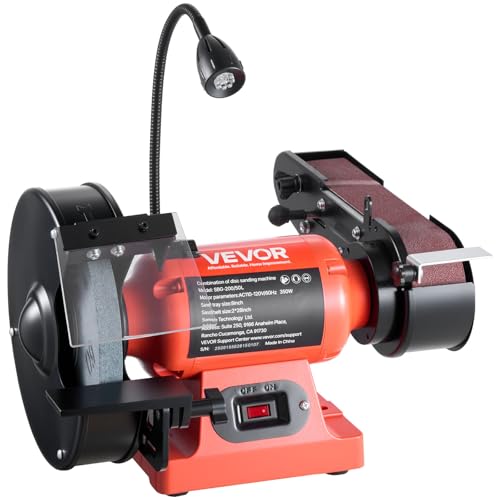
Best for: DIY metalworkers and knife sharpeners
This VEVOR combo machine pairs an 8-inch grinding wheel with a 2 x 28-inch sanding belt in one steel-bodied unit. Its 350W motor drives the wheel at 3,450 RPM and the belt at 1,500 RPM, giving you separate speeds for grinding and sanding. At around $85, it targets home workshops that need two basic abrasive tools without buying two machines.
The belt arm adjusts through 0 to 90 degrees, so it can work horizontally or vertically. That range helps with flat stock, curved pieces, and knife edges, although the final result still depends on your technique and abrasive choice. A clear eye shield helps block debris, while the built-in LED light adds illumination near the work area. Rubber feet reduce movement on a bench, and the steel base should handle routine DIY use. The main trade-off is control. The listed design provides fixed wheel and belt speeds, not variable-speed adjustment, and the compact combination layout may feel less convenient than dedicated machines for frequent, heavy work.
Pros
- Combines an 8-inch grinder and 2 x 28-inch belt sander in one machine.
- 0 to 90-degree belt adjustment supports horizontal and vertical sanding.
- LED light, eye shield, steel body, and rubber feet improve visibility and stability.
Cons
- No variable-speed control is listed, which limits adjustment for delicate materials.
- The 350W motor and compact combo format may not suit sustained, heavy stock removal.
4. WEN BG4276 6-Inch Single-Speed Bench Grinder
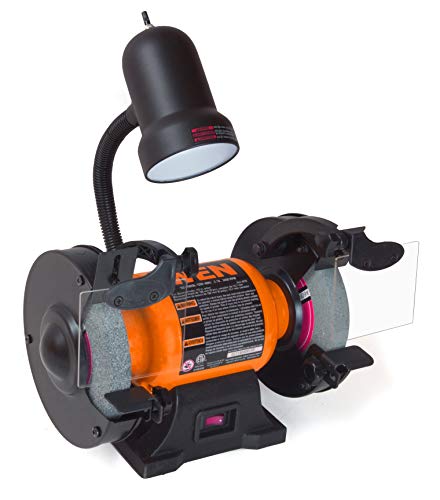
Best for: Home tool and knife touch-ups
The WEN BG4276 is a compact, single-speed bench grinder for sharpening and reshaping small metal tools. Its 2.1-amp motor spins two 6-by-3/4-inch wheels at up to 3,450 RPM. That speed suits jobs such as refreshing worn knife edges, drill bits, chisels, and older hand tools. The grinder also includes adjustable eye guards, which add a basic layer of protection from sparks and debris.
Its two included wheels cover different tasks. The 60-grit wheel offers a finer surface for controlled sharpening, while the 36-grit wheel removes material faster. A flexible work light points toward the grinding area, useful when shop lighting is limited. At around $60, this model keeps the price moderate for a home workshop. The two-year warranty also gives buyers some coverage after purchase. Still, it uses one fixed speed, so it lacks the control found on variable-speed grinders.
Pros
- The 2.1-amp motor reaches 3,450 RPM for sharpening and reshaping metal tools.
- Separate 36-grit and 60-grit wheels handle fast removal and finer work.
- The flexible lamp improves visibility around the grinding wheels.
Cons
- The single-speed design offers less control for delicate materials or varied tasks.
- Six-inch wheels provide less working surface than larger eight-inch grinders.
3. VEVOR Bench Buffer Polisher

Best for: Home metal and jewelry polishing
The VEVOR Bench Buffer Polisher is a compact benchtop machine for polishing metal, jewelry, wood, jade, plastic, and silver. Its brushless motor runs at 3,590 RPM and does not use carbon brushes, so there are fewer routine parts to replace. At about 1.8 kg, it is easy to move between a workbench and storage. The price is around $47, though it can change.
Three wheels cover different jobs. The soft wool wheel suits final polishing, the medium abrasive-fiber wheel handles general surface work, and the harder grinding wheel can remove rust or smooth rough areas. The package also includes more than 100 sculpting and engraving tools for small DIY projects. A clear splash guard helps block debris, while adjustable rests support angled grinding. Non-slip feet add stability, but the light frame may still need firm placement during tougher work.
Pros
- Brushless 3,590-RPM motor avoids carbon-brush replacement.
- Three wheel types support rough grinding, surface polishing, and final buffing.
- More than 100 included tools cover small engraving and sculpting tasks.
Cons
- Fixed high speed may feel too aggressive for delicate materials or precision polishing.
- The 1.8-kg body is portable, but it offers less weight for heavy grinding than a larger bench grinder.
2. DEWALT DW758 Bench Grinder

Best for: Heavy-duty workshop grinding jobs
The DEWALT DW758 is an 8-inch bench grinder built for fast stock removal and demanding shop work. Its 3/4 HP induction motor runs at 3,600 rpm, giving it the speed needed for grinding, shaping, and deburring metal. A cast iron base and motor housing add weight and support, which can help limit movement during use. At around $159, it costs more than many compact home-shop grinders.
Its 12-1/2-inch gap between the wheels gives you room for longer workpieces. That spacing is useful when grinding larger tools, brackets, or metal edges that may feel cramped on smaller models. The precision-machined aluminum tool rests allow more accurate workpiece positioning than basic stamped rests. Rear exhaust ports in the wheel guards support smoother airflow around the wheels. Still, this is a straightforward, high-speed grinder rather than a multi-purpose sharpening station. Buyers should also plan for a sturdy bench and enough clearance around the machine.
Pros
- The 3/4 HP induction motor provides strong power for heavy grinding tasks.
- Cast iron construction gives the grinder a stable, durable foundation.
- The 12-1/2-inch wheel spacing accommodates longer workpieces.
Cons
- Its 3,600 rpm operating speed can create heat on small or delicate tools.
- The 8-inch design needs more bench space than a compact 6-inch grinder.
1. 6-Inch Variable-Speed Bench Grinder

Best for: Home workshops and knife sharpening
This 6-inch bench grinder handles sharpening, deburring, shaping, and light polishing. Its 2.5-amp brushless induction motor runs from 1,725 to 3,450 RPM. Lower speeds suit controlled sharpening, while higher settings support quicker grinding. The package includes 36-grit and 60-grit wheels, both with a 1/2-inch arbor. That gives you one coarse option and one finer wheel for touch-up work.
The cast-iron base and rubber feet help limit movement on a workbench. Tool-free guides, a water tray, and adjustable eye and spark shields make repeated jobs easier to manage. A built-in LED light can improve visibility around the contact area. The included diamond dresser can reshape an uneven wheel. At around $120, it costs more than basic fixed-speed models. Its 6-inch wheels are better for household tools and small metal parts than large shop jobs.
Pros
- Variable speed from 1,725 to 3,450 RPM supports controlled sharpening and faster grinding.
- Cast-iron construction and rubber feet help reduce bench movement.
- LED light, eye shields, water tray, and wheel dresser add practical workshop support.
Cons
- Six-inch wheels offer less working surface than 8-inch models.
- The 2.5-amp motor may feel limited during heavy material removal.
Buying Guide
Motor power is the most important factor when choosing a brushless bench grinder. A stronger motor removes material faster and maintains speed under pressure, especially with hard steel or frequent use.
- Motor output and speed: Choose 3/4 to 1 horsepower for routine shop work. A variable-speed model from 1,800 to 3,600 RPM suits both sharpening and grinding.
- Wheel size and compatibility: A 6-inch grinder fits general repairs and takes less bench space. Choose 8 inches for larger tools, then confirm the arbor size, wheel thickness, and replacement-wheel availability.
- Power source: Corded models provide steady output for long sessions. Cordless versions need an 18V or 20V battery system, and two batteries are practical for extended work.
- Safety features: Look for adjustable eye shields, spark deflectors, stable tool rests, and overload protection. A no-voltage restart feature prevents automatic startup after a power cut.
- Vibration, noise, and price: Rubber feet and balanced wheels reduce movement. Expect roughly $150 to $300 for a capable brushless unit, with premium models costing more.
If you cannot have everything, prioritize motor output and stable speed under load.
Frequently Asked Questions
How does a brushless bench grinder compare with a brushed model?
A brushless bench grinder usually runs cooler, needs less motor maintenance, and can deliver longer service life than a brushed version. It also costs more and may require electronic controls or a battery system. A setup uses two wheels, one coarse and one fine. Frequent users may prefer it, while occasional users may favor a simpler corded model.
What should I look for in a brushless bench grinder?
Look for a brushless motor, adjustable speed, stable tool rests, eye shields, and wheel guards sized for your work. Wheel diameter also matters, since 6-inch grinders suit many home tasks while 8-inch versions offer more working clearance. Check the rated speed, arbor size, included wheels, cord or battery setup, and replacement-part availability.
Can brushless bench grinders sharpen knives and tools?
Yes, a brushless bench grinder can sharpen knives, chisels, and lawn-tool blades when fitted with a suitable fine wheel and used with controlled pressure. Keep the edge moving to limit heat, and follow the tool maker’s angle guidance. For many knives, that angle falls near 15 to 20 degrees per side, but it varies.
Are brushless bench grinders worth buying for home use?
They are worth buying for frequent home grinding or sharpening, but a brushed bench grinder often offers better value for occasional work. If you use the machine once a month, lower purchase cost and easy brush replacement may matter more than motor efficiency. Regular users may value cooler operation and fewer brush-related service tasks.
Conclusion
The 6-Inch Variable-Speed Bench Grinder is the top choice for DIYers and home workshop owners who want adjustable control in a compact footprint. If your priority is faster stock removal or larger wheels, choose an 8-inch brushless model instead, provided your bench has room for its wider base. Before buying, double-check the wheel size, included quantity, compatibility with your planned abrasives, and the current price, since listings can change. Also confirm the motor’s speed range, guard design, tool rests, noise level, and warranty terms. A smaller grinder fits crowded benches better, while a larger unit can handle bigger jobs with fewer passes. Pick the option that matches your workspace, projects, and available budget.