
The Victorinox Fibrox Pro Chef’s Knife is the best chef knife for most buyers because it combines a grippy handle with a durable stainless-steel blade at a reasonable price. Its 8-inch size handles vegetables, herbs, meat, and most home cooking tasks without feeling oversized.
This guide is for home cooks replacing a dull blade, building a first collection, or choosing a more comfortable tool for daily prep. The main factors are blade length, steel type, handle comfort, edge maintenance, and price. An 8-inch blade balances control and cutting space, while stainless steel reduces rust concerns but still needs proper care. The six picks below are ranked with clear reasons and honest drawbacks for each, so you can match the knife to your kitchen and cooking habits.
Quick Comparison
| # | Product | Best For | Price | |
|---|---|---|---|---|
| 1 | Victorinox Fibrox Pro Chef’s Knife | Busy Home Cooks | ~$47 | View → |
| 2 | HOSHANHO Japanese High-Carbon Chef's Knife | High-Carbon Steel Fans | ~$65 | View → |
| 3 | imarku Japanese Chef Knife | Budget-Conscious Kitchen Upgraders | ~$40 | View → |
| 4 | imarku 7-Inch Santoku Knife | Small-Handed Vegetable Choppers | ~$40 | View → |
| 5 | SHAN ZU Damascus Chef Knife | Damascus Pattern Collectors | ~$50 | View → |
| 6 | PAUDIN Chef Knife | First-Time Knife Buyers | ~$32 | View → |
6 Top Chef Knife Picks
The list is ranked from sixth to first, and the final entry is our top pick for your kitchen.
6. PAUDIN Chef Knife

Best for: Everyday home cooking and meal prep
The PAUDIN Chef Knife is an 8-inch kitchen knife for chopping, slicing, mincing, and dicing. Its 5Cr15MoV high-carbon stainless steel blade measures 2mm thick, giving it a relatively thin profile for vegetables, boneless meats, fish, chicken, and other routine prep. The blade is hand polished, according to the manufacturer, and comes in a gift box for family members, home cooks, or restaurant staff.
Its curved cutting edge and ergonomic wood handle give it a traditional chef’s-knife shape. The handle is designed to balance with the blade, which can make repeated cutting more comfortable than using a short utility knife. The decorative wave pattern also gives the knife a distinctive look. However, PAUDIN states that this is not real Damascus steel. At around $32, it sits in the affordable-to-midrange part of the chef knife market, though prices can change.
Pros
- 8-inch blade handles common chopping, slicing, mincing, and dicing tasks.
- 2mm 5Cr15MoV steel provides a thin profile for vegetables and boneless meats.
- Wood handle and balanced shape offer a comfortable grip for longer prep sessions.
Cons
- The waved blade pattern is decorative, not genuine Damascus construction.
- A 2mm chef knife is not the right choice for bones, frozen foods, or heavy cleaving.
5. SHAN ZU Damascus Chef Knife
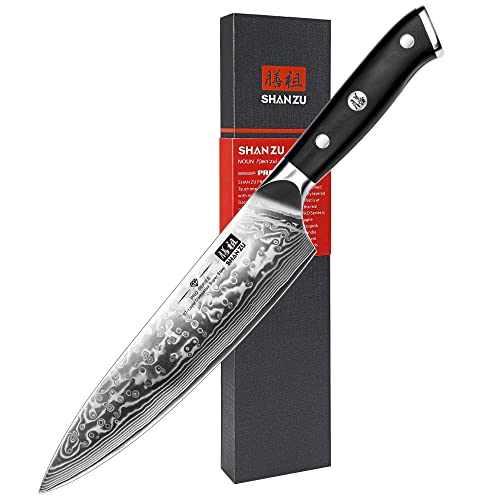
Best for: Everyday home cooks wanting an 8-inch chef knife
The SHAN ZU is an 8-inch chef knife built around a 10Cr15MoV Japanese steel core. Its blade measures 2.2 mm thick, with a 15-degree cutting angle and a listed 62 HRC hardness rating. The maker says repeated folding and forging create a 67-layer Damascus construction, rather than a laser-etched surface pattern. At around $50, it sits in the midrange for a home kitchen knife.
A frosted G10 handle gives the knife a firm, textured grip and helps balance the 5.3-inch handle against the blade. Its total weight is 270 g, so it should feel substantial rather than featherlight. The 8-inch size suits common prep work, from vegetables to boneless meat, but may feel large for users who prefer compact blades. The listed rust-resistant steel still needs prompt drying and sensible storage. SHAN ZU includes a 12-month warranty for covered issues.
Pros
- The 67-layer Damascus build gives the blade a visible steel pattern and added material depth.
- The 15-degree edge angle suits controlled slicing and general kitchen prep.
- The G10 handle resists moisture and provides a textured, secure grip.
Cons
- At 270 g, this knife may feel heavy compared with lightweight chef knives.
- The 8-inch blade is less convenient for small ingredients and tight cutting spaces.
4. imarku 7-Inch Santoku Knife
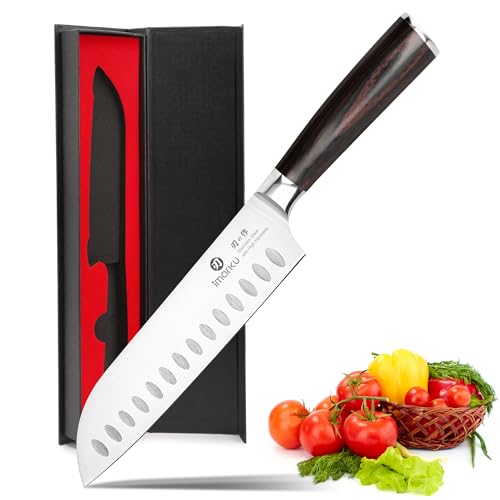
Best for: Everyday home cooks with limited counter space
The imarku Santoku is a 7-inch kitchen knife for chopping, slicing, dicing, and mincing. Its Japanese high-carbon stainless steel blade measures 2.5mm thick and is designed to resist rust, corrosion, and discoloration. The size sits between a compact utility knife and a full-size chef’s knife, so it can handle vegetables, fruit, meat, and bread without taking up much room.
Its hand-polished edge is listed at 15-18 degrees per side. That narrow angle should support precise cuts, though it may need careful sharpening over time. The hollow-edge dimples create small gaps between the blade and food, which can reduce sticking with potatoes, cucumbers, and other moist ingredients. A Pakkawood handle provides a shaped grip, while the material avoids some cracking and swelling issues found with untreated wood. At around $40, it offers useful features at a midrange price. It arrives in a black gift box, but packaging may vary during the brand update. Support includes a 3-month refund period and a 1-year exchange service.
Pros
- 7-inch blade suits everyday prep and smaller workspaces.
- 15-18-degree edge supports controlled, fine slicing.
- Hollow-edge dimples can help food release from the blade.
Cons
- The 7-inch length gives less cutting surface than an 8-inch chef’s knife.
- High-carbon steel still needs prompt drying to help prevent stains or rust.
3. imarku Japanese Chef Knife

Best for: Home cooks wanting one versatile knife
The imarku Japanese chef knife is an 8-inch gyutou designed for everyday prep. Its high-carbon stainless steel blade contains 0.6 to 0.75 percent carbon and 16 to 18 percent chromium. The listed hardness is HRC 56 to 58, which suits slicing, chopping, dicing, and meat preparation. The chromium content should help resist corrosion, but the blade still needs proper care. It sells for around $40, though prices can change.
What stands out is the mix of a full-size blade and a Pakka handle. The handle uses an FSC-certified wood frame and is shaped for a steadier, more comfortable grip during longer prep sessions. The knife is intended to stay sharp through demanding kitchen work, including trimming meat from bones. Still, its 8-inch length may feel large for small cutting boards or fine detail work. The listing also includes a three-month refund period and lifetime warranty. Logo placement may vary because the brand is changing its packaging and markings.
Pros
- 8-inch blade handles vegetables, meat, slicing, and chopping.
- 0.6 to 0.75 percent carbon supports a hard, sharp edge.
- Pakka handle and FSC-certified wood frame provide a stable grip.
Cons
- The full-size gyutou profile may feel bulky for small tasks.
- A chef knife is not a replacement for a dedicated boning or paring knife.
2. HOSHANHO Japanese High-Carbon Chef’s Knife

Best for: Home cooks wanting a sharp daily chef’s knife
The HOSHANHO is an 8-inch chef’s knife made from Japanese 10Cr15CoMoV high-carbon steel. Its listed hardness reaches 60 HRC, which should help the edge stay sharp through regular meal preparation. The blade is hand-sharpened to 13 degrees per side, a relatively fine angle suited to clean cuts through vegetables, fruit, meat, and cheese.
Its matte blade has a subdued look and receives ice tempering plus heat treatment for added resistance to moisture, corrosion, and temperature changes. The wood handle uses a curved shape for comfort, while the sloped bolster supports a pinch grip. At around $65, it sits above basic supermarket knives but below many premium Japanese-style options. The included gift box also gives it a more presentable feel for holidays or housewarming gifts. Still, the product description does not provide a blade warranty, protective sheath, or care instructions, so buyers should confirm those details before ordering.
Pros
- 60 HRC Japanese high-carbon steel offers a hard edge for repeated kitchen prep.
- The 13-degree-per-side edge supports precise slicing and chopping.
- Curved wood handle and sloped bolster encourage a controlled pinch grip.
Cons
- An 8-inch blade may feel too large for cooks who prefer compact knives.
- High-carbon steel needs prompt drying and regular care to reduce staining or rust risk.
1. Victorinox Fibrox Pro Chef’s Knife

Best for: Everyday home cooks who want one main knife
The Victorinox Fibrox Pro is an 8-inch chef’s knife with a 7.9-inch stainless steel blade. It handles common prep work, including chopping vegetables, mincing herbs, slicing meat, and dicing fruit. The tapered edge is designed for clean cuts, while the black thermoplastic elastomer handle provides a textured, non-slip grip. At around $47, it offers a practical option for kitchens that need one versatile cook’s knife.
Its strongest feature is the balance between low-maintenance care and controlled handling. The knife is dishwasher safe, although hand washing can help preserve the edge and finish over time. Victorinox makes this model in Switzerland and covers it with a lifetime warranty against defects in materials and workmanship. The blade will still need routine sharpening, and the compatible sharpeners are sold separately. This is a straightforward workhorse, not a specialty blade for delicate slicing or decorative cuts.
Pros
- The 7.9-inch stainless steel blade covers most everyday kitchen tasks.
- The TPE handle offers a secure grip, including when hands are wet.
- Dishwasher-safe construction simplifies cleanup after meal preparation.
Cons
- The blade requires regular sharpening, and Victorinox’s recommended sharpeners cost extra.
- Dishwasher cleaning may shorten edge life compared with careful hand washing.
Buying Guide
The most important factor is handle fit, because a secure grip improves control and reduces hand fatigue during repeated chopping. Choose a blade size and weight that match your hand, cutting board, and usual prep work.
- Blade length: A 7- to 8-inch blade suits most home cooks. Choose 6 inches for small hands or tight boards, and 9 to 10 inches for large batches.
- Steel type: Stainless steel needs less care and resists rust. X50CrMoV15, AUS-8, and VG-10 are practical choices. Carbon steel can take a very sharp edge, but it needs drying after each wash.
- Edge angle: Look for about 15 to 20 degrees per side. Angles near 15 degrees slice finely, while 20 degrees offers better resistance to chips and dents.
- Handle and balance: Hold the knife before buying if possible. The handle should allow a secure grip without finger pressure, and the blade should not feel tip-heavy. A 7- to 10-ounce knife suits many cooks.
- Price and upkeep: Expect $30 to $80 for a dependable home model. Budget for a honing rod and whetstone, or plan professional sharpening every 2 to 6 months.
If you cannot have everything, prioritize a comfortable handle and controlled balance, since poor fit can make any blade tiring and unsafe.
Frequently Asked Questions
How do I choose a chef’s knife for everyday cooking?
Choose a chef’s knife by matching its blade length, handle comfort, balance, and steel to your cooking habits. An 8-inch blade suits most home kitchens, while a 6-inch model feels easier to control for smaller hands. Look for a secure grip and enough clearance between your knuckles and the cutting board.
What makes one kitchen knife better than another?
One kitchen knife is better than another when it stays sharp, cuts predictably, feels balanced, and fits the work you do. A full-tang design can improve durability, but it does not guarantee better cutting. For most cooks, a 2 to 3 millimeter spine offers useful strength without making vegetables difficult to slice.
Can an affordable chef knife perform well?
Yes, an affordable chef knife can perform well if its blade arrives sharp, keeps its edge reasonably well, and feels safe in your hand. Many budget options cost under $40, but their factory edges may vary and handles can feel less refined. A sharpener or honing rod may also add to the total cost.
Are heavier chef knives better for chopping?
No, heavier chef knives are not automatically better for chopping because control, balance, and sharpness matter more than weight alone. A knife around 7 to 10 ounces gives many cooks enough force without causing quick fatigue. Heavier models can suit dense foods, but lighter options often feel faster when preparing onions, herbs, and other ingredients.
Conclusion
The Victorinox Fibrox Pro Chef’s Knife remains the strongest pick for home cooks who want a reliable, affordable blade with a comfortable, slip-resistant handle. If your priority is lighter weight and sharper, more precise slicing, choose a Japanese gyuto instead, since its thinner blade usually moves through vegetables and boneless meat with less resistance. Before buying, double-check the blade size, handle compatibility with your grip, included quantity, and current price, since listings may offer different lengths or multi-piece bundles. A 7-inch model suits smaller hands and tighter workspaces, while an 8-inch version gives most cooks more cutting room. Keep the knife sharp, wash it by hand, and store it safely for longer service.