
Winter mornings in the garage can feel like stepping into a freezer, whether you’re warming up a vehicle, tackling a DIY project, or simply storing tools. Choosing the right natural‑gas garage heater isn’t just about comfort; it’s about safety, energy efficiency, and protecting your equipment from moisture‑induced damage. With dozens of models on the market, the decision can quickly become overwhelming, especially when you need reliable heat that won’t break the bank or compromise ventilation. In this guide we’ve cut through the clutter to spotlight the seven best natural‑gas garage heaters, evaluating performance, durability, and cost so you can make an informed choice. Let’s dive in.
7 Best Garage Heater Natural Gas Picks
We’ve tested and compared top models to bring you the most reliable, efficient, and cost‑effective natural‑gas heaters for any garage.
7. Reznor UDXC-60 Natural Gas Heater

The Reznor UDXC‑60 is a rugged, 60,000 BTU natural‑gas unit heater designed for indoor spaces such as garages, workshops, warehouses, and factories. It delivers 83 % thermal efficiency thanks to a patented single‑burner combustion system and a TCORE2 titanium‑stabilized aluminized‑steel heat exchanger that resists corrosion and cracking. The unit is equipped with a low‑static propeller fan that circulates warm air quietly and evenly, while an integrated circuit board with a digital display provides real‑time status and fault alerts. Installation is flexible: threaded‑nut retainers at four suspension points let you mount the heater to the ceiling or wall (brackets sold separately), and it can be vented with either a Category 1 double‑wall B‑vent (vertical roof) or a Category 3 single‑wall vent (horizontal sidewall). The built‑in disconnect and LED indicators add safety and easy troubleshooting, making the UDXC‑60 a dependable heat source for commercial and residential environments.
Pros
- High output & efficiency – 60,000 BTU with 83 % thermal efficiency heats large spaces quickly while saving fuel.
- Quiet, forced‑air circulation – Low‑static propeller fan distributes heat evenly without disruptive noise.
- Versatile mounting & venting – Ceiling‑mount or wall‑mount options and dual venting configurations simplify installation.
Cons
- Mounting hardware sold separately – Requires additional purchase of brackets or suspension kits.
- Requires natural‑gas supply – Not suitable for locations without existing gas service or where propane/electric heating is preferred.
6. Rinnai FC824N Ventless Gas Heater
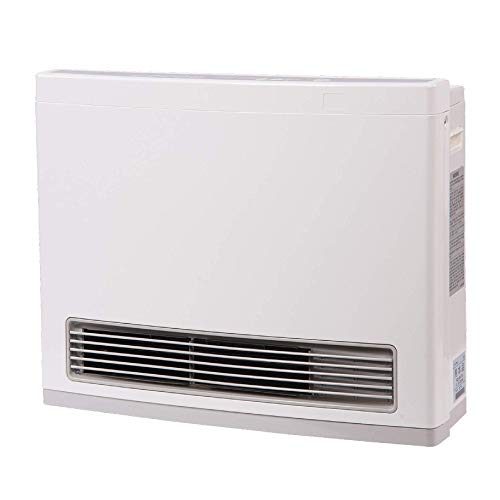
The Rinnai FC824N Ventless Natural Gas Heater delivers powerful, energy‑efficient warmth for small rooms and tight spaces. Its compact design features a warm‑air outlet and bottom‑front louvers that circulate heated air evenly, so you stay comfortable even on the coldest days. The programmable thermostat display provides precise temperature control, while the digital adaptive control learns your heating patterns and adjusts output automatically. A built‑in self‑diagnostics system alerts you to any issues, making maintenance hassle‑free.
Safety is front‑and‑center with a flame‑failure device, overheat switch, oxygen‑depletion sensor, and tilt switch that shut off gas and power if the unit overheats, tips over, or the flame is extinguished. The cool‑to‑touch, child‑safe cabinet includes a lockable safety latch, giving you peace of mind in homes with kids or pets. Because it’s vent‑less and duct‑less, installation is straightforward, but Rinnai recommends professional installation through their Find a Rinnai PRO service to ensure optimal performance and compliance with local codes.
Pros
- Efficient, rapid heating in compact spaces thanks to directed airflow and louvers.
- Smart, programmable thermostat with adaptive control and self‑diagnostics for effortless comfort.
- Comprehensive safety suite (flame‑failure device, ODS, overheat & tilt switches) plus child‑safe, lockable cabinet.
Cons
- Requires professional installation, adding an extra step and cost.
- As a vent‑less gas unit, it may need adequate room ventilation to maintain indoor air quality in tightly sealed homes.
5. Modine HD45AS0111 Natural Gas Hot Dawg Heater
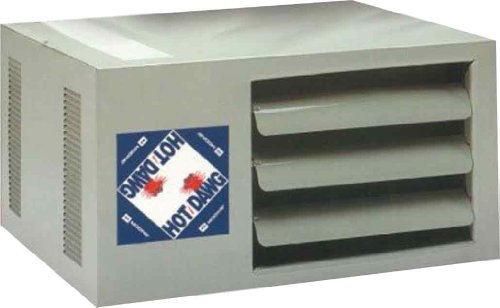
The Modine HD45AS0111 Natural Gas Hot Dawg Garage Heater delivers a robust 45,000 BTU output while maintaining an impressive 80 % thermal efficiency. Its low‑profile, grey enclosure blends seamlessly into any garage or workshop, and the quiet operation means you can work, exercise, or relax without the distraction of a noisy furnace. Designed for versatility, the unit is certified for residential, commercial, and industrial environments, giving you confidence that it meets strict safety and performance standards. Installation is straightforward thanks to field‑wired connections, pre‑punched knockouts for gas and electricity, and a standard‑power exhaust that works with either side‑wall or roof venting using a compact vent pipe.
Pros
- Quiet operation keeps the workspace comfortable and noise‑free.
- High efficiency (80 %) reduces fuel consumption and operating costs.
- Easy, flexible installation with ready‑made knockouts and a standard exhaust simplifies wiring and venting.
Cons
- The grey finish, while neutral, may not match all décor preferences.
- Requires a dedicated natural‑gas line and proper venting, which may add to initial setup time in locations without existing infrastructure.
4. Mr. Heater F260560 Big Maxx MHU80NG
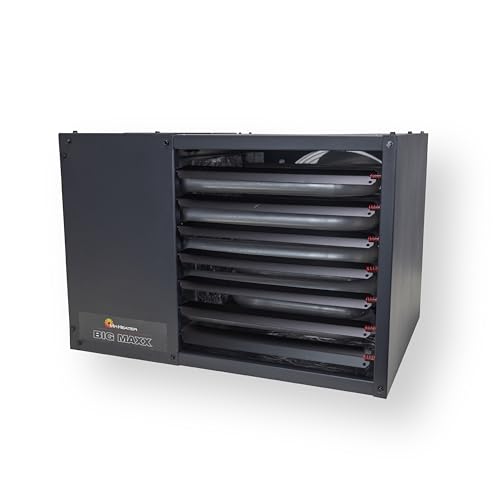
The Mr. Heater F260560 Big Maxx MHU80NG is a powerhouse natural‑gas unit heater built for tough work environments. Its ceiling‑mounted, forced‑air design lets you transform garages, barns, or workshops into comfortable, year‑round spaces without sacrificing headroom. With 80,000 BTU output, it can warm up to 2,667 sq ft—perfect for a three‑ or four‑car garage. The low‑profile unit requires a minimum 10‑ft ceiling height and only 8 ft of clearance from the base to the floor, making installation flexible in most structures. Compatibility with standard 24‑volt thermostats—or newer Wi‑Fi‑enabled models (sold separately)—gives you precise temperature control. Safety is front‑and‑center, featuring a high‑temperature shut‑off switch and a gas‑safety flame‑sensor that automatically cuts power if the flame goes out.
Pros
- High heating capacity – 80,000 BTU covers large spaces up to 2,667 sq ft.
- Versatile thermostat options – works with both traditional 24 V and modern Wi‑Fi thermostats.
- Built‑in safety features – temperature shut‑off and flame sensor protect against overheating and gas leaks.
Cons
- Requires a minimum 10‑ft ceiling – not suitable for low‑clearance areas.
- Thermostat sold separately – you’ll need to purchase a compatible thermostat for temperature control.
3. ProCom MN100TPA Infrared Heater

The ProCom Heating Natural Gas Ventless Infrared Plaque Heater (Model MN100TPA‑B) delivers a powerful 10,000 BTU output from a compact, stylish unit that fits neatly in any room. Using natural gas, it can comfortably warm up to 500 sq ft, making it ideal for offices, bedrooms, or living areas. A built‑in thermostat offers High, Medium, and Low settings, so you can dial in the perfect temperature without fuss. The heater can be wall‑mounted with the supplied hardware or placed on the floor using the included base feet, giving you flexibility in placement. Safety is front‑and‑center: a push‑button ignition and an oxygen‑depletion sensor (ODS) automatically shut the unit off if carbon monoxide or low‑oxygen conditions are detected, and the heater is ANSI‑certified. Because it runs on gas, no electricity is needed—perfect for power outages or emergency situations.
Pros
- High heating capacity – 10,000 BTU covers up to 500 sq ft, providing fast, consistent warmth.
- Versatile installation – wall‑mount or floor‑stand options let you position the heater wherever you need it.
- Safety‑focused design – ODS shut‑off and ANSI certification give peace of mind.
Cons
- Ventless operation – requires adequate ventilation to prevent moisture buildup in tightly sealed spaces.
- Natural‑gas only – not suitable for locations without a gas line or for users seeking electric heating.
2. Mr. Heater F260550 MHU50NG Natural Gas Heater

The Mr. Heater F260550 Big Maxx MHU50NG is a powerful, ceiling‑mounted forced‑air unit heater designed to transform garages, barns, and workshops into comfortable, productive spaces. Delivering 50,000 BTU, it can warm up to 1,667 sq ft—roughly the size of a three‑car garage—so you’ll stay warm even on the coldest days. The unit runs on natural gas, eliminating the need for electricity‑intensive heating elements, and its compact black housing blends discreetly with most industrial interiors. Installation is straightforward: mount it on the ceiling, connect to a standard 24‑volt thermostat, or upgrade to a Wi‑Fi‑enabled thermostat (sold separately) for remote temperature control.
Pros
- High heating capacity – 50,000 BTU easily covers large workspaces up to 1,667 sq ft.
- Flexible thermostat options – works with existing 24‑V thermostats or modern Wi‑Fi models for smart control.
- Space‑saving ceiling mount – frees floor area for tools, vehicles, or livestock.
Cons
- Requires a natural‑gas line and proper venting; not suitable for locations without gas service.
- Wi‑Fi thermostat not included, adding an extra cost if you want remote control.
1. Rinnai V75NT Vent Free Heater

The 30,000 BTU Vent‑Free Blue Flame Natural Gas Heater delivers powerful, instant heat for spaces up to 1,000 sq ft without the need for electricity or exterior venting. A battery‑powered electronic ignition (battery included) lights the blue flame at the push of a button, while the built‑in adjustable thermostat lets you set and maintain your desired temperature. Designed for natural‑gas lines, the unit operates safely indoors thanks to a low‑oxygen safety shut‑off that automatically turns the heater off if oxygen levels drop. A compact, vent‑free design means you can place it anywhere in a room, and an optional blower fan kit (sold separately) adds forced‑air circulation for faster warming.
Pros
- High heating capacity – 30,000 BTU/hr easily covers large rooms or open‑plan areas.
- No external power or venting required – perfect for workshops, garages, or cabins where wiring or vent installation is impractical.
- Built‑in safety features – low‑oxygen shut‑off and thermostat keep the environment comfortable and secure.
Cons
- Battery‑only ignition – the heater relies on a battery for start‑up; a dead battery will prevent ignition until replaced.
- Blower fan sold separately – without the optional fan, heat distribution is slower and may feel uneven in larger spaces.
Buying Guide
When selecting a natural‑gas garage heater, focus on heating capacity, safety features, and energy efficiency to ensure reliable warmth without overspending. A good unit should match your garage size, run quietly, and require minimal maintenance.
- Heating capacity and BTU rating: Choose a heater whose BTU output covers the cubic footage of your garage, allowing a 10‑15°F temperature rise.
- Safety and ventilation: Look for built‑in flame‑fail sensors, automatic shut‑off, and proper venting options to prevent carbon monoxide buildup.
- Energy efficiency and cost of operation: Models with high AFUE ratings and modulating burners lower fuel consumption and monthly bills.
- Build quality and durability: Cast‑iron or stainless‑steel housings resist rust and corrosion, extending the heater’s lifespan in damp environments.
- User‑friendly features and reviews: Digital thermostats, remote controls, and positive customer feedback indicate ease of use and reliable performance.
By weighing capacity, safety, efficiency, durability, and real‑world feedback, you can pick a natural‑gas garage heater that keeps your space warm and cost‑effective.
Frequently Asked Questions
What factors should I consider when choosing a natural gas garage heater?
- Size of the garage – larger spaces need higher‑output units.
- Ventilation requirements – many gas heaters need proper exhaust to avoid carbon monoxide buildup.
- Installation type – wall‑mounted, ceiling‑mounted, or portable units each have different clearance and mounting needs.
- Energy efficiency – look for models with a high AFUE (Annual Fuel Utilization Efficiency) rating to save on fuel costs.
- Noise level – especially important if the garage is attached to living spaces.
How do I determine the right BTU rating for my garage?
- Calculate the volume: Length × Width × Height (in feet).
- Apply a base heating factor: Roughly 30–40 BTU per cubic foot for a typical garage.
- Adjust for insulation:
- Well‑insulated: use the lower end of the range.
- Poorly insulated or high ceilings: add 10–20 % more BTU.
- Example: A 20 × 20 × 10 ft garage = 4,000 ft³ → 4,000 × 35 ≈ 140,000 BTU. Choose a heater rated near this value, allowing a small safety margin.
Are there safety features I should look for in a natural gas garage heater?
- Automatic shut‑off if flame loss or overheating is detected.
- Carbon monoxide (CO) sensor that cuts power when CO levels rise.
- Tip‑over protection for portable units.
- Ventilation controls or built‑in exhaust fans to ensure proper airflow.
- UL or CSA certification confirming the unit meets safety standards.
These features help protect both your garage and anyone using it.
Conclusion
Investing in a natural‑gas garage heater ultimately comes down to balancing safety, efficiency, and comfort for your workspace. By prioritizing proper ventilation, choosing a unit with reliable thermostatic control, and matching the heater’s BTU output to your garage’s size, you’ll enjoy consistent warmth without excessive fuel costs. Look for models that incorporate built‑in safety features such as flame‑fail protection and automatic shut‑off, and be sure to follow manufacturer installation guidelines or enlist a professional. With these considerations in mind, you can confidently select a gas heater that keeps your garage functional year‑round while protecting both your vehicle and your peace of mind.